

This story originally appeared in the Winter 2025 issue of Adventure Cyclist magazine. Join today to get yours.
Mountain biking in the ’90s was wild. It wasn’t just the neon kits and rigid rigs. It was that nobody knew exactly what was possible on two wheels in the woods, and the bike industry was throwing everything it had at the wall to find out. Some of it worked. A lot of it didn’t.
Fast forward 30 years, and gravel bike designers are throwing a lot at the wall, too, including bringing back some of the tech that made ’90s mountain bikes so damn exciting. Suspension seatposts, two-inch-wide knobbies, 20 millimeters of travel built into the stem — I remember when a lot of this technology first hit the trails, and I remember when it disappeared just as quickly.

Erik de Brun, co-founder of bicycle component company Redshift Sports, says there’s one practical reason for this revival: “Mountain bikes back then were great all-purpose, all-terrain bikes, and gravel bikes fill that same space today.”
Among the products stepping up to make gravel bikes all-purpose whips? Redshift’s ShockStop suspension stems and seatposts, which were inspired by similar tech from 30 years ago such as the Girvin Flexstem. Redshift isn’t the only bike company that’s feeling nostalgic. Cane Creek still makes an updated version of the Thudbuster, a seatpost suspension system I lusted over back in the 1990s. Cannondale’s Topstone gravel bike doesn’t just feature a modern version of an old-school Lefty fork, it has the equivalent of 30 millimeters of travel at the seatpost thanks to clever engineering reminiscent of the old elastomer pucks briefly used to give rear triangles some squish.
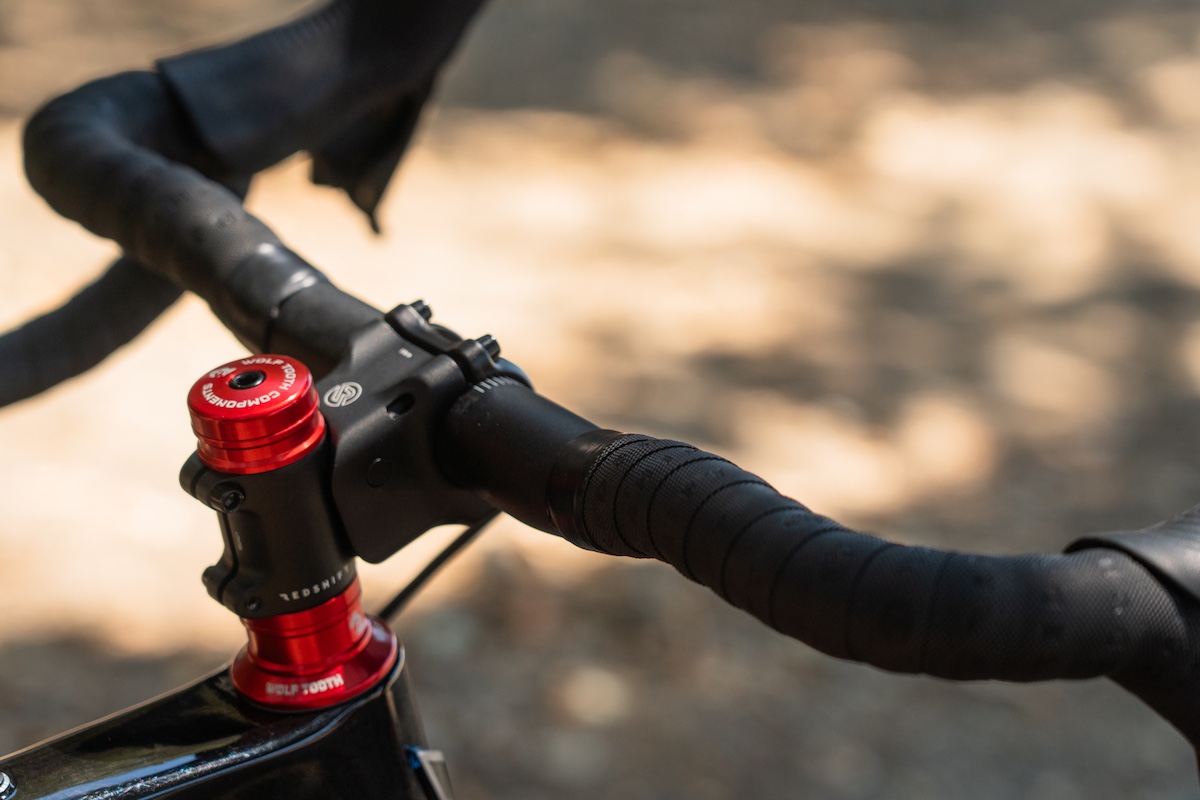
So why are bike companies repurposing tech that was all but abandoned three decades ago? And why is it working so well for gravel? “You can only go so far with suspension before it becomes too heavy for gravel,” says Nina Baum, product manager for Cannondale. “Some of the ideas from the early days of mountain biking hit the sweet spot [between weight and performance].”
This repackaged tech is opening rough roads and singletrack to today’s gravel cyclists. Not that we’re seeing carbon copies of vintage mountain bikes. Modern gravel rigs, with their 1x drivetrains, disc brakes, and tubeless tires are superior machines for light off-roading, but I’d argue that the spirit of ’90s mountain biking is alive and well in the sheer versatility of today’s gravel bike.
“It’s like a Swiss Army Knife, just like the mountain bike was in the ’90s before specialization took over,” Baum says, referencing mountain biking’s diversification into cross-country, trail, all-mountain, enduro, downhill, and other increasingly gravity-assisted subcategories. “You rode that bike everywhere … to the store, over miles of road on the way to the trailhead, then all over the forest. I want all of those parts of the ride back again.”
Still, it’s possible the convergent evolution that’s pushed gravel to adopt all-but-forgotten mountain bike tech might drive that tech’s obsolescence a second time. In September, Trek released its first full-suspension gravel bike, the CheckOUT, which gives riders 60 millimeters of travel in the front and 55 millimeters in the rear thanks to a modern fork and shock. Will other, more plush rides follow suit to the point where rigid gravel bikes, even ones with suspension stems and seatposts, feel stiff and antiquated? Cannondale’s Baum doesn’t think so.
“Gravel bikes still need to feel fast on the road,” she says. “But who knows? I’d like to have a crystal ball to look into the future.” Maybe it doesn’t matter as long as gravel continues to co-opt the most important feature from mountain biking’s halcyon days: fun.
“You felt like you could go anywhere,” de Brun says, “but you also felt like you were on the edge sometimes. I think gravel today captures a lot of that same feeling.”
The post Why Gravel Is Reinventing Mountain Bike Tech from the 1990s appeared first on Adventure Cycling Association.