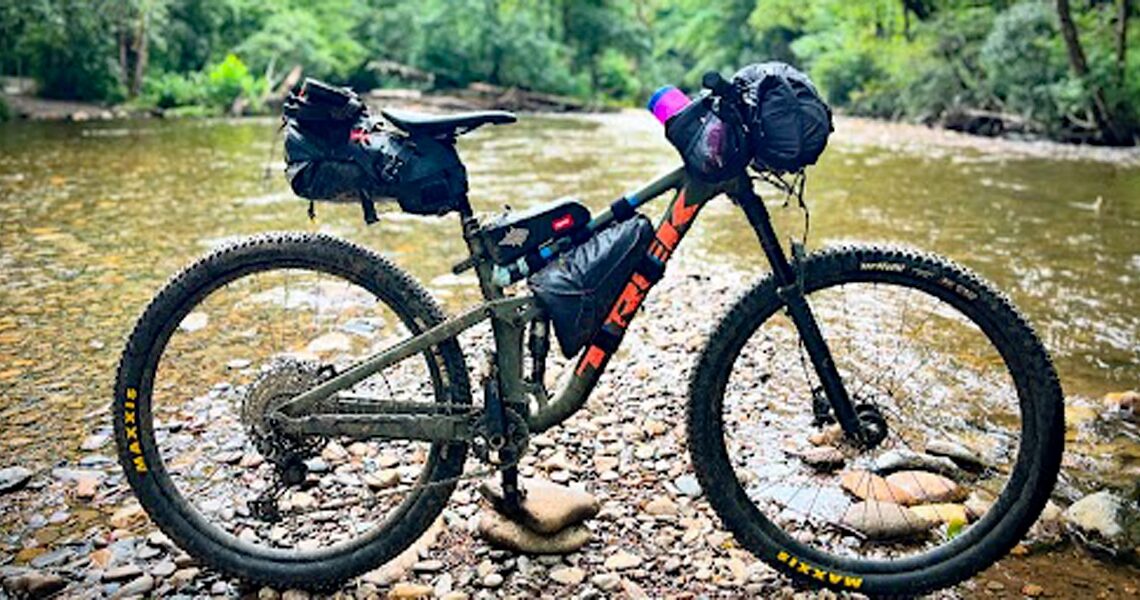

I’m not sure if I’ll ever line up for the Trans North Georgia Adventure (TNGA) again. The idea of riding it again, let alone competing, makes me shudder, yet I can’t help but think about what I’d change if I were to ride again next year. Here I unpack my final reflections from August’s ride and, for now, put the idea to rest.

The Common Challenges
Like most riders, I ran into a familiar trio of issues on course:
- Nutritional pacing
- Hydration
- Fatigue
Nutritional Pacing
As a dietitian, I pride myself on planning fueling strategies for both training and racing. In my Part One TNGA blog, I laid out my nutrition targets in detail. Most riders, by contrast, showed up with only a rough guess at their needs. A handful had calorie goals (200–400 kcal per hour), and fewer still worked off carbohydrate-per-hour targets.
My challenge wasn’t planning—it was execution. Remembering to eat consistently became its own battle. I did have my head unit set to ping me every 40 minutes, and on a normal ride that’s enough: bottles and gels are planned in advance to fit my needs, so the math is easy. But TNGA complicates things. Resupplies vary from town to town, fueling is a mix of real food and sports products, and serving sizes are anything but uniform.
What I’d Change
Plan Rest Stop Orders in Advance
I’d review menus for restaurants in the towns I knew I’d stop in (Dalton, Helen, Dillard) and have “go-to” orders mapped out—high-calorie, macro-balanced, and time-efficient. That doesn’t mean I’d ignore cravings, but it would give me a baseline plan. Small adjustments like the ones below can add up over several days of hard riding.
Actual example from Day 2:
McDonald’s breakfast—bacon, egg, and cheese biscuit, hashbrown, Coke slushy, and latte
870 Calories / 21 g Protein / 110 g Carbs / 40 g Fat
New order example:
Hotcakes + egg and cheese bagel + iced latte
1290 Calories / 30 g Protein / 188 g Carbs / 39 g Fat
Repeatable Snack Combos to Reduce Mental Math
On-bike, it’s unrealistic to script every snack. But I could simplify by creating combos I know are available and repeatable.
Example: One 5-oz bag of Nerd Clusters (120 g carbs) + a Gatorade (30 g) = 2 hours at 75 g/hr.
Consider CGMs as a Safety Net
While continuous glucose monitors (CGMs) are banned in professional competition, they might be valuable for a self-supported ultra like TNGA. CGMs have their flaws (accuracy, lag times, interpretation), but linking one to my head unit could help identify downward trends before I perceive issues or begin to decline mentally or physically.
Research on ultramarathoners shows carbohydrate intake, energy intake, and average (not peak) blood glucose correlate with faster race speeds. In other words: steady fueling beats big highs or low lows (1). More fueling leads to higher blood glucose and more fuel for the brain and muscles, but preventing the lows is the biggest advantage here.
My ideal approach would be to:
- Collect fueling/CGM data in training.
- Establish a “floor” blood glucose level or at least detect downward trends.
- Use timers + RPE as primary cues, while CGM trends provide guardrails.
Together, these changes would reduce the mental burden of constant math while adding a safeguard against under-fueling.

Hydration
Heat was a limiting factor for many riders this year. Day One brought relentless sun exposure, humidity, and mid-90s temperatures—right when the route’s hardest features came into play.
Hydration at TNGA can be tricky. When should you stop and filter water, how much should you carry, how much do you actually drink?
From my previous rider survey (N=24), average carry capacity was ~4 L, ranging from 2 L to 10 L. The typical setup was two bottles and a hydration vest, often supplemented with frame bags or fork-mounted bottles for longer stretches.
I ran one 650 mL bottle plus a 2 L USWE vest. Many bikepackers avoid vests since they trap heat and add weight to the back, but in my opinion the extra capacity was worth it. Still, hydration is a moving target—sweat rate, exposure, and availability are always shifting. The risks are real: dehydration, hyponatremia, and nausea can derail a ride and even become dangerous.

Figure 1. Race day spreadsheet I use with my clients to predict estimated onset dehydration assuming a steady state (actually there’s no such thing, but we can get close).
What I’d Change
I had done sweat rate testing in training and recommend it to my athletes. But on course, I drifted between two imperfect strategies: drinking by thirst (which can lag well behind actual need) and drinking by availability (dictated by resupply points). If I could redo it, I’d build a binary plan: one intake rate for cooler temps, another for hot conditions. Using my sweat rate data, I’d establish a minimum “floor” of hydration.
Example From My Sweat Rate:
- 70–75°F → 0.725–1.15 L/hr
- 75–85°F → 1.15–1.40 L/hr
Day One Projection (10 hrs, split evenly):
- Morning: 5 hrs @ 1.04 L/hr = 5.2 L
- Mid-day: 5 hrs @ 1.38 L/hr = 6.9 L
- Total estimated on-bike sweat loss = 12.1 L
Baseline off-bike needs: 2–3 L
Estimated Daily total: 14–15 L
My carry capacity was 2.6 L. That means refilling every 2–2.5 hours—four to five refills on Day One alone. Using urine color, frequency, and volume alongside thirst would help fine-tune intake to ensure I don’t under- or overdo it. Where resupply is limited, I’d plan extra capacity (+ ~1 L).
Finally, sodium balance. My sweat sodium concentration averages ~1 g/L. That means replacing 30–65% of losses on the bike—via Nuun, The Right Stuff, or Precision Hydration tablets—would be critical to avoid hyponatremia. A small portable hydration assessment device like the HDrop Gen 2 could even assess hydration status each morning and provide real-time data to confirm my hydration plan (3,4).
Other Considerations: Sleep & Recovery
One thing is certain: most riders, myself included, wished for more or better-quality rest on the trail.
Two supplements stand out for potential benefits in the future:
- Creatine: Beyond strength, creatine enhances carbohydrate loading, speeds recovery, and may offset cognitive decline linked to sleep deprivation (5,6). Using a higher dose (20g) split in 2 doses throughout the day with meals could help refuel and keep the brain fresh.
- Tart Cherry Juice: Its antioxidants may aid recovery, performance, and sleep quality. A 1–2 oz concentrate taken in the days leading up to the event (this is termed “precovery”) and ~90 minutes before bed could be beneficial, even if partly via placebo (7).
Closing Thoughts
TNGA was both brutal and beautiful—a ride that tested every dimension of endurance. While I don’t know if I’ll return, reflecting on what I’d change has value: for me, for my athletes, and maybe for anyone else eyeing the route.
Dialing in nutrition, hydration, and recovery isn’t about perfection; it’s about creating systems that reduce decision-making when you’re exhausted. The fewer choices I have to make at mile 200, the more likely I am to stay fueled, hydrated, and safe.
If nothing else, this breakdown is my way of closing the chapter—until, of course, the next time TNGA calls.
References
- Ishihara, K., Uchiyama, N., Kizaki, S., Mori, E., Nonaka, T., & Oneda, H. (2020). Application of Continuous Glucose Monitoring for Assessment of Individual Carbohydrate Requirement during Ultramarathon Race. Nutrients, 12(4), 1121. https://doi.org/10.3390/nu12041121
- Kenefick R. W. (2018). Drinking Strategies: Planned Drinking Versus Drinking to Thirst. Sports medicine (Auckland, N.Z.), 48(Suppl 1), 31–37 https://doi.org/10.1007/s40279-017-0844-6
- hDrop Technologies Inc. (2024). The science of sweat and hydration. Retrieved [Month Day, Year], from https://hdroptech.com/hydration-sweat-testing-science
- McCubbin A. J. (2023). Modelling sodium requirements of athletes across a variety of exercise scenarios – Identifying when to test and target, or season to taste. European journal of sport science, 23(6), 992–1000. https://doi.org/10.1080/17461391.2022.2083526
- Roberts, P. A., Fox, J., Peirce, N., Jones, S. W., Casey, A., & Greenhaff, P. L. (2016). Creatine ingestion augments dietary carbohydrate mediated muscle glycogen supercompensation during the initial 24 h of recovery following prolonged exhaustive exercise in humans. Amino acids, 48(8), 1831–1842. https://doi.org/10.1007/s00726-016-2252-x
- Gordji-Nejad, A., Matusch, A., Kleedörfer, S. et al. Single dose creatine improves cognitive performance and induces changes in cerebral high energy phosphates during sleep deprivation. Sci Rep 14, 4937 (2024). https://doi.org/10.1038/s41598-024-54249-9
- Barforoush, F., Ebrahimi, S., Abdar, M. K., Khademi, S., & Morshedzadeh, N. (2025). The Effect of Tart Cherry on Sleep Quality and Sleep Disorders: A Systematic Review. Food science & nutrition, 13(9), e70923. https://doi.org/10.1002/fsn3.70923
The post Ultra-Fueling: Trans North Georgia Reflections appeared first on PezCycling News.