

Cycling has long captivated audiences with a unique blend of physical endurance, strategic thinking, and cultural resonance.
From weekend rides along scenic trails to professional races covering hundreds of kilometers, the sport has always celebrated human stamina and tactical intelligence.
Over the past century, cycling has evolved far beyond recreation or local competition.
The marquee events, the Tour de France and Giro d’Italia, have become global spectacles, showcasing not just athletic ability but the power of adaptation, strategy, and technological progress.
These Grand Tours offer a lens through which we can understand more than cycling alone. They reflect broader trends in sport, society, and culture: how traditions persist, how rules and formats must evolve, and how competitors continually push boundaries.
Observing the evolution of these iconic races offers insight into how any enduring practice, whether a sport, a game, or a cultural ritual, must balance legacy with progress.
Even games that have been part of daily life for generations, such as chess or Filipino classics like Tongits, must adapt to new formats and expectations if they are to remain relevant in an ever-changing world.
Origins & Early Years
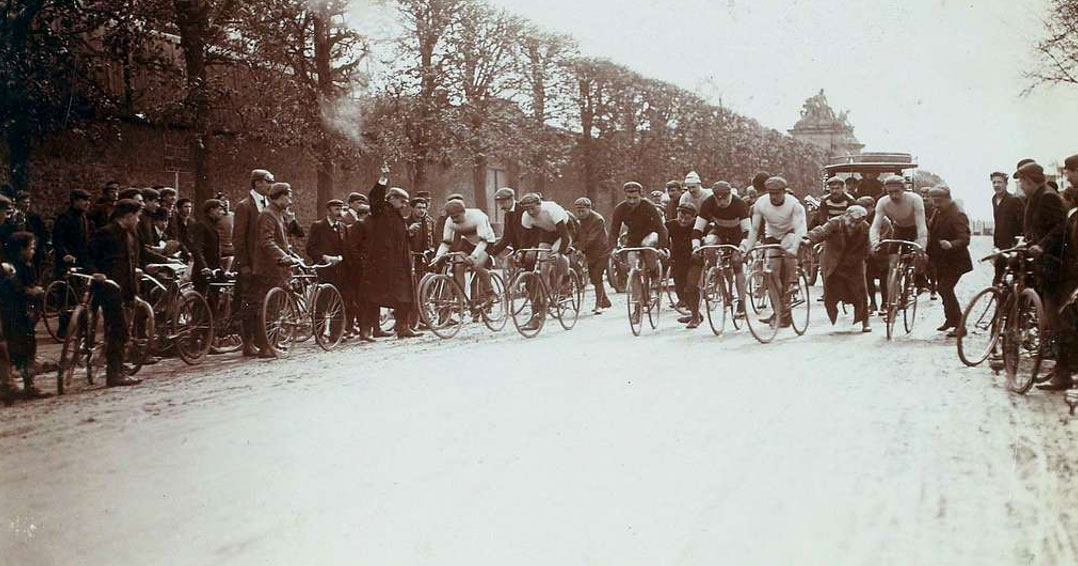
At the dawn of the 20th century, the Tour de France emerged from the ambitions of a newspaper, L’Auto, to boost circulation through spectacle. Its first edition in 1903 featured six stages spanning roughly 2,428 km, primarily on unpaved roads.
Riders tackled grueling distances with minimal support, facing mechanical failures, harsh weather, and challenging terrain.
There were no team cars, no energy gels, and no radio communication. The success relied purely on endurance, cunning, and resilience.
Similarly, the Giro d’Italia debuted in 1909 via La Gazzetta dello Sport, inspired by the Tour’s success. Luigi Ganna, the first winner, completed the eight stages and 2,447.9 km under conditions that would be considered extreme even by today’s standards.
Both races were as much about national pride as athletic competition. Riders became symbols of human perseverance and determination, capturing the public imagination and elevating cycling to a cultural phenomenon in France and Italy.
The early years of these races also established strategic principles that endure today. Riders learned to pace themselves over multiple days, conserve energy for decisive moments, and read their competitors’ strengths and weaknesses.
Mountain stages, first introduced in the 1910 Tour de France, added dramatic tactical elements, forcing riders to adapt and innovate. These foundational experiences set the stage for the transformations that would follow in the decades ahead.
Evolution Through the Decades
Over the 20th century, the Grand Tours evolved far beyond their humble beginnings.
The Tour de France introduced increasingly complex strategies, including mountain assaults, time trials, and mass sprints, while modern teams began employing specialized roles, such as climbers and sprinters, to maximize collective performance.
Today, the Tour covers roughly 3,600 km over three weeks, involving carefully orchestrated stages designed for maximum athletic and media impact.
The Giro d’Italia experienced a similar transformation, adding challenging mountain passes, time trials, and international competitors. These changes reflected both technological innovation and the globalization of the sport.
Modern riders now rely on lightweight carbon-fiber bikes, aerodynamic clothing, advanced nutrition, and real-time data analysis.
Average speeds have increased dramatically, with flat stages sometimes exceeding 50 km/h, showcasing a level of performance unimaginable for the pioneers of 1903 and 1909.
Route design also changed strategically. No longer merely circumnavigating France or Italy, routes now incorporate high-profile climbs, urban finishes, and international starting points, all optimized for television and streaming audiences.
Such adaptations reflect the dual priorities of preserving tradition while embracing innovation. The Grand Tours illustrate how endurance, skill, and spectacle must evolve together, merging athletic excellence with audience engagement.
The Heritage of Raw Ambition
The Tour de France and Giro d’Italia are more than historic races; they are living chronicles of ambition, adaptation, and cultural significance.
From dirt roads and minimal equipment to global media coverage and cutting-edge bicycles, these events have repeatedly reinvented themselves to remain relevant and compelling.
Their evolution offers lessons far beyond cycling. Just as these races adapt to technological advances and shifting audience expectations, enduring traditions and games must evolve as well.
Chess has embraced digital formats, online tournaments, and instant replay analysis. For Filipinos, traditional card games like Tongits have transitioned from casual, social gameplay into competitive Tongits free game formats online.
The principle is the same: survival and continued relevance require balancing respect for tradition with openness to innovation.
Ultimately, the lessons from the Grand Tours are universal. Whether navigating a mountain climb, a long race stage, or the rules of a timeless game, success depends on honoring the past while actively engaging with the challenges of the present.
In a rapidly changing world, adaptation is not optional but essential. By studying the history and evolution of these iconic races, we gain insight into endurance, strategy, and the art of staying relevant across generations.
FAQ
Q: Why is the yellow jersey in the Tour so iconic?
A: Introduced in 1919, the yellow jersey originally reflected the color of the race organizer’s newspaper, L’Auto, symbolizing the overall leader.
Q: How have bike technologies changed the races?
A: Modern bikes are lighter, aerodynamic, and optimized for climbing and time trials. From steel frames to carbon-fiber machines, technology has increased both speed and safety.
Q: Why do these races remain relevant today?
A: They combine human drama, strategic depth, and cultural significance. Adaptation, innovation, and storytelling have kept them central to cycling culture and global sports.
The post The Evolution of Cycling’s Grand Tours: Endurance, Innovation, and Relevance appeared first on PezCycling News.