
As professional cycling hurtles toward another pivotal season, the forces shaping the sport extend far beyond the peloton itself. In this edition of AIRmail, The Outer Line examines the evolving political, economic, and media dynamics influencing cycling within the broader global sports landscape. From renewed scrutiny of sportswashing by both state and private sponsors, to shifting power structures driven by team wealth, media consumption trends, and athlete-led investment in women’s sport, these developments reveal a peloton increasingly shaped by off-bike decisions. Add in transfer intrigue, preseason signals from the sport’s biggest stars, and a cyclocross season already delivering elite-level drama, and the contours of cycling’s near future are coming sharply into focus.
Analysis, Insight, and Reflections from The Outer Line.
# Catch up on pro cycling – and its context within the broader world of sports – with AIRmail … Analysis, Insight and Reflections from The Outer Line. You can subscribe to AIRmail here, and check out The Outer Line’s extensive library of articles on the governance and economics of cycling here. #
Key Takeaways:
● Sportswashing Not Limited to State Players
● Team Camps Wrap Up as Peloton Rolls Toward 2026
● Nielsen Highlights Sports Media Trends
● Cyclocross Update

Sportswashing Not Limited to State Players
We have routinely discussed allegations of bad behavior and sportswashing by various Middle Eastern states involved in pro cycling. But it is worth noting that various private sponsors are not immune to similar concerns. A recent Dutch report (forwarded by a reader) documented a horrific 2021 massacre at a giant natural gas facility being built by the French petroleum giant TotalEnergies in northern Mozambique. Although the details are sketchy, and are largely denied by TotalEnergies, hundreds of people were apparently confined to storage containers, and then later beheaded or otherwise killed as part of a regional battle with various terror groups. Reports allege that TotalEnergies was complicit in war crimes because it “directly financed and materially supported Mozambican soldiers protecting its compound from an ISIS-linked insurgency.” The event was first documented by Politico last year, and resulted in both the British and Dutch governments pulling their funding for the huge development project. The company has said it “firmly rejects all such accusations” and suggested that media reports were invalid because it had evacuated its staff and was no longer in the area at the time of the reported massacre. It is remarkable that this story has not received broader coverage given the alleged scale of the atrocities.

Team Camps Wrap Up as Peloton Rolls Toward 2026
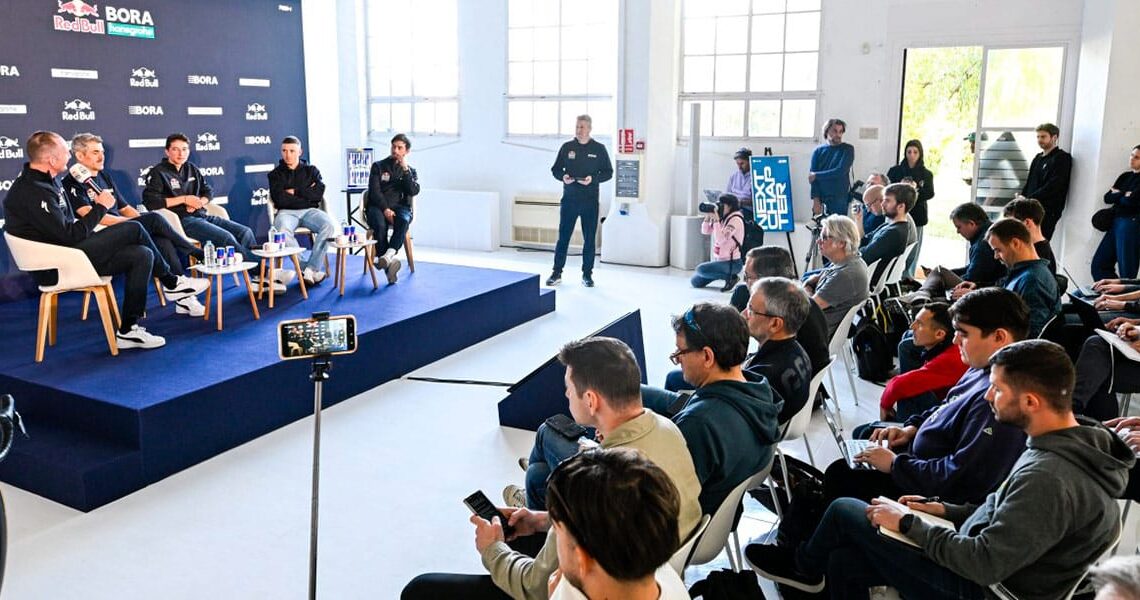
Spain’s beautiful Costa Blanca was the sport’s unofficial capital over the past week, as WorldTour teams converged for their final pre-season tune-ups. Long, steady climbs, perfect tarmac, and reliably mild winter weather made for the familiar sight of full rosters logging massive training days, new equipment being stress-tested in the real world (including a quick covert trip from Tadej Pogačar to the cobblestones of Roubaix), and quiet conversations about roles, leadership, and ambition unfolding between café stops. At the teams’ individual media presentations, 2026 objectives were laid out. A loud signal came from the UAE Team when Pogačar brushed aside any notion of easing off after another dominant season; questions about workload and longevity were met with something closer to defiance than caution. Pogačar spoke openly about the Spring Classics, going as far as to say that a win at Paris–Roubaix would be the most meaningful achievement left for him at this stage of his career, adding that another Tour de France win wouldn’t really move the needle much for him. For a rider who already has almost everything on his résumé, the intensity of his winter focus suggested not fatigue, but a sharpening of intent. This doesn’t seem encouraging for the rest of the professional peloton.

Away from the microphones, the camps were also the backdrop for the closing stages of the quiet but sometimes dramatic transfer chessboard. Oscar Onley was notably absent from Team Picnic PostNL’s gathering, a no-show that, when combined with recent public comments, strongly hints that he won’t be riding for the squad in 2026. There were also rumors suggesting his team stands to collect a significant multi-million Euro windfall for agreeing to part ways with their star rider in the middle of his contract. Such a “sale” could be critical for the Dutch squad, which was recently denied the standard three-year WorldTour license from the UCI, and instead restricted to an annual plan due to uncertainty about their financial situation. Rumors continue to link Onley to INEOS Grenadiers, a move that would immediately complicate what many had assumed was a straightforward path for Derek Gee to the same destination. Gee, meanwhile, was spotted training with Lidl‑Trek, adding another layer of intrigue as his unresolved legal situation with NSN Cycling (previously Israel–Premier Tech) continues to hang in the background.

Taken together, these developments only underline the on-going structural shift in the sport that we have highlighted recently. Talented riders breaking through on smaller budget teams are increasingly funneled toward the sport’s richest organizations, where super-teams can offer entire performance ecosystems rather than just bigger salaries. Both small-budget and big-budget teams seem to be settling into living in this new reality. As the peloton rolls toward the 2026 season, the competitive balance already looks more top-heavy than it has in the past, shaped as much by off-season transfer and talent rearrangement as by in-season legs.

Nielsen Highlights Sports Media Trends
Nielsen released its annual report on sports media trends, highlighting among other things the significance of women’s sports, growing anticipation of the 2026 World Cup soccer championship, streaming sports narratives, and growing fan interest in Major League Baseball. The report notes that the 2025 Super Bowl made history by attracting over 127 million viewers – a new record for television viewership, and the occurrence on October 27th of a rare “sports equinox” when games from all five major sports leagues – the MLB, NFL, NHL, NBA, and MLS – happened on the same day. The report also indicates that overall sports viewership is continuing to grow, particularly as streaming unlocks new pathways into untapped markets; in turn, this provides all kinds of new avenues for sponsors to get more involved in sports. And in terms of sports narrative streaming and documentaries, the report again underlines the well-known effect of the Formula 1 series “Drive to Survive,” which has helped to more than double F1 viewership since it started in 2019, creating a huge windfall for the sport’s owner Liberty Media and its key broadcasters. According to Nielsen, total viewing for streaming sports documentaries reached 16,937 million minutes in 2024, up by more than a factor of four since 2021.
Last week we reported on new sports investment mechanisms for the ordinary investor; however, some of the billionaire class are still doing quite well in this arena – both from a financial and a competitive perspective. Perhaps most notable is the empire created by Walton in-law Stan Kroenke. Kroenke’s teams are currently highly favored to win the Super Bowl (the Los Angeles Rams), the Stanley Cup (the Colorado Avalanche) and the English Premier League (Arsenal). His Denver Nuggets only have the second-best odds currently to win the NBA Championship. His Kroenke Sports and Entertainment holding company is estimated by CNBC to have a valuation of over $20 billion, putting him well ahead of the other billionaire sports magnate groups like Harris Blitzer (owners of the Commanders, 76ers and Devils) and the Fenway Sports Group (Red Sox, Liverpool and Penguins). The cousin of Kroenke’s wife Ann is Rob Walton, the new principal owner of the Denver Broncos – another potential favorite for next year’s Super Bowl. Either way, if one forgives the hapless Rockies, it’s a good time to be a sports fan in Denver.
The economic and competitive market for women’s sports has grown exponentially in no small part due to the demands and guidance of its elite athletes, whether through personal star power or collective team pressure. Case in point, Germany’s 14 Women’s Bundesliga soccer clubs voted en masse last week to break away from the men’s league management organization. The new Frauen-Bundesliga (FBL) will coordinate on long-term marketing and professionalization objectives separately from the men’s DFL business organization. The collective action was the outcome over strategy and power-sharing disagreements between the women’s clubs and the men’s league, with regards to a prior joint-venture proposal in which the women’s clubs had limited power. The key driver in this breakaway movement is investment, although the women’s teams and athletes are also focused on minimum player salaries and improved personnel and infrastructure standards.
The men’s Bundesliga previously committed €100 million to be invested in women’s football, but the speed and scale of investment in women’s sports suggests that the women’s league is right to chart its own course – and women’s WorldTour cycling could be on a similar path. Investment in WWT cycling is primarily concentrated in one pocket: the teams. As marketing and business development engines for sponsor stakeholders, there are serious long-term return on investment considerations. The current WorldTour model is ripe for an overhaul with regards to promoting and developing the women’s sport separately from the men’s calendar, especially with regards to the consumer demographics and global demand for women’s sports overall. With Germany hosting the 2029 women’s UEFA championship, the FBL change in direction and specific market focus is right on cue – not just elevating the sport’s visibility in one of the world’s largest markets over the next 18 months, but also creating development momentum to maintain competitive parity with England and the U.S. for the women’s FIFA World Cup.

Cyclocross Update
The 2025-2026 men’s and women’s European cyclocross schedule has been in full swing for at least two months, but the “unofficial” start for the men happened when Mathieu van der Poel took the start at the UCI Namur CX World Cup on Sunday – and won. That’s not to say that the men’s season has been without drama and incredible racing, as both the Belgian Superprestige and X²O Badkamers series have provided fans with exciting outcomes. Despite this – and Toon Aerts’ EU Championship victory – fans couldn’t help but shake the feeling that the “leveling-up” would happen when MdvP and his cohort, Wout Van Aert, rejoined the starting grid after their short, post-road offseason recoveries. Both stars appear on track for head-to-head World Cup racing in time for the Christmas races.
On the women’s side, Lucinda Brand has exerted dominance in both the Belgian series and the women’s World Cup. While some have criticized this situation due to the prolonged absence of Dutch star and current world champion, Fem van Empel due to illness, and the late start for Puck Pieterse, nothing could be further from reality. Brand has shown exceptional form and fire in her many victories, not just overpowering a grid that includes several much-improved riders, but also demonstrating greater skill and being unfazed by her mistakes – and making fewer of them. Depending on Van Empel’s recovery and the time Pieterse needs to get back to form, there could be some epic battles ahead. But regardless of the situation, Brand is making a run in women’s CX not seen since her compatriot Marianne Vos dominated the discipline over a decade ago; she seems poised to be the host-nation Netherlands’ first option at the World Championships in Hulst, in early 2026. Overall, both the men’s and women’s racing have made for fantastic broadcast viewing – despite fans’ inability to consistently access the live content outside of Europe.
Written and Edited by Steve Maxwell / Joe Harris / Spencer Martin
THE OUTER LINE
www.theouterline.com
@theouterline
Visit our website for our latest articles and commentary. And check out our extensive Article Library for hundreds of in-depth articles about the economics, governance, structure and competition of pro cycling, organized by subject. (Advisory Group: Peter Abraham, Luke Beatty, Brian Cookson OBE, Nicola Cranmer, Prof. Roger Pielke, Jr., Dr. Bill Apollo and Prof. Daam Van Reeth.)
The post Sportswashing, Team Camps, Media Trends & Cyclocross | The Outer Line appeared first on PezCycling News.