
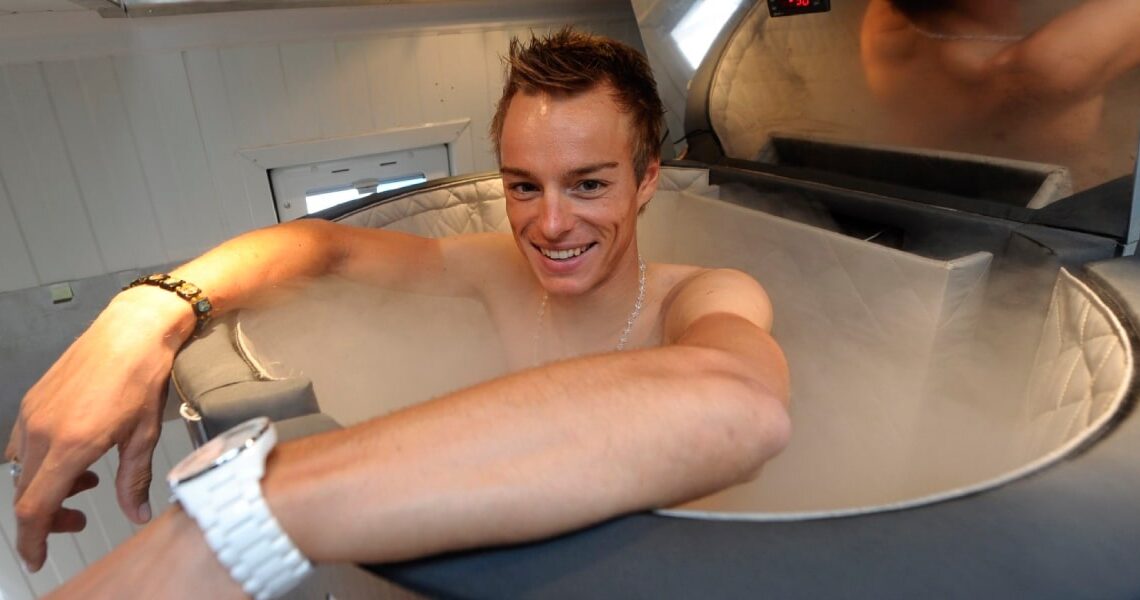

While heat is often associated with reduced athletic performance and the dangers of heat stress, research increasingly shows that controlled heat exposure can provide powerful long-term health benefits. In this interview on CBC Radio’s The Dose podcast with Dr. Brian Goldman, PEZ ToolBox editor and environmental stress expert Dr. Stephen Cheung explores the latest science behind heat therapy and how tools like saunas, steam rooms and hot tubs can improve cardiovascular function, vascular health and potentially even brain health. Drawing on more than three decades of research into environmental stress and human performance, Dr. Cheung explains how passive heat exposure works, how often it should be used, and how athletes and everyday people can safely incorporate heat therapy into their routines.

~ The vast majority of my scientific career since I started graduate school back in 1991 has been devoted to studying how environmental stress – especially heat and cold – affect human physiology and performance. It’s a research field that I absolutely love, and I find how humans can perform and adapt to such extreme environments fascinating.
Over the course of my career, I’ve worked with a lot of groups, from World Champion cyclists to Canadian national teams to firefighters and the military, to perform to the best of their ability in extremely hot environments. That’s because heat can stop you from performing to your peak capacity at best; at worst, it can land you in the emergency room with heat exhaustion or heat stroke.
But from a health perspective and completely apart from any performance perspective, getting ourselves warm can actually be a very good thing (Cheung and Ainslie 2022). Specifically, regular passive heat exposure – through saunas, steam rooms, or hot tubs – have been linked to:
- Healthier, stronger, and more elastic blood vessels.
- Reduced risk for strokes.
- Reduced risk for neurodegenerative diseases such as dementia and Alzheimer’s.
One of the main potential mechanisms for how the above health benefits occur is through increasing the pulsatile or rhythmic blood flow through our blood vessels. This shear stress on the blood vessels causes the endothelium (the inner lining of the blood vessels) to release molecules that causes the blood vessels to relax. One of these molecules – nitric oxide – is also the same ultimate aim of eating beets. The shear stress also causes the smooth muscles surrounding the blood vessels to become stronger.
The Dose Podcast
I recently appeared as the guest on CBC Radio’s “The Dose” podcast, hosted by physician Dr. Brian Goldman. It’s a great podcast on all sorts of medical topics with excellent and knowledgeable guests, providing really clear and actionable advice.
In this podcast, I go through:
- What qualifies as heat therapy, and what are the common ways we can access it?
- How does heat therapy actually work to improve the health of my blood vessels?
- What’s the evidence for heat therapy and long-term brain health?
- What are the safe limits for heat therapy?
- How often should I do heat therapy to get maximum benefits?
- Should I alternate heat therapy and cold plunges?
- What are some health concerns that might make heat therapy unsafe for me?
** Listen to the full podcast featuring Dr. Cheung HERE. **
Here’s the link to the episode transcript.
You can also read Dr. Cheung’s article on “Taking The Plunge – Does Cold Bathing Help My Health?” HERE.
References
Cheung SS, Ainslie PN (2022) Advanced environmental exercise physiology, Second edition. Human Kinetics, Inc, Champaign, USA

Dr. Cheung at work
The post Saunas, Heat Therapy and Health: The Science Explained by Dr. Stephen Cheung appeared first on PezCycling News.