

Pro cycling continues to be shaped as much by economics, governance, and athlete well-being as by what happens on the road. In this edition of AIRmail, The Outer Line delivers in-depth analysis and informed perspective on the forces reshaping the sport—from soaring rider contract buy-outs and shifting power dynamics in the men’s peloton, to warning signs in the Women’s WorldTour, cyclocross’s winter spotlight, and the growing pressures faced by elite riders. We also look beyond cycling to examine how private equity is beginning to enter college sports, offering important parallels for cycling’s own financial future.
Analysis, Insight, and Reflections from The Outer Line.
# Catch up on pro cycling – and its context within the broader world of sports – with AIRmail … Analysis, Insight and Reflections from The Outer Line. You can subscribe to AIRmail here, and check out The Outer Line’s extensive library of articles on the governance and economics of cycling here. #
Key Takeaways:
● Increase in Rider Contract Buy-Outs
● Is This Creating a New Landscape in Pro Cycling?
● Private Equity Begins to Enter College Sports
● Women’s WorldTour Down One Team
● Updated Men’s and Women’s Cyclocross News
● The Pressures Faced by Pro Riders

Increase in Rider Contract Buy-Outs
One dominant trend in 2025 showed that massive contract buyouts are no longer fringe transfer mechanisms in pro cycling; these have become a routine aspect of roster construction – at least for a certain level of team. Over just the past few months, we’ve seen Juan Ayuso’s reported €10 million move to Lidl-Trek, Remco Evenepoel’s rumored €7 million switch to Red Bull–Bora–Hansgrohe, and growing expectation that INEOS Grenadiers will acquire Oscar Onley for 2026. And thankfully Derek Gee’s legal battle with Israel-Premier Tech appears to have been settled with a multi-million euro payment to release the Canadian to the Lidl-Trek squad. (Gee was spotted at the Lidl-Trek team’s Spanish pre-season camp and is expected to race for the team in 2026.) Each of these moves underscore just how aggressively the bigger-budget teams – particularly those who need a “big name” to justify their sponsor investments – are vacuuming up talent mid-contract. As we surmised last week, this may be leading to a new balance of power in the peloton, where some of the smaller teams are becoming de facto talent incubators while bigger teams sit back and shop from a curated shelf of proven performers.
Is This Creating a New Landscape in Pro Cycling?
As we continue to see the big-budget teams open their checkbooks to levels once thought impossible, new questions are arising. Are these deals actually worth it for the buyer? And are these sales now critical revenue sources for smaller teams to stay financially afloat – particularly those that are skilled at identifying and developing talent? Lidl-Trek provides an interesting case study in this regard: between Ayuso and Gee, it appears they could spend north of €10 million in buyouts alone this off-season. This is capital that could just as plausibly have funded the sport’s most ambitious development pipeline, purpose-built to identify and nurture waves of GC and Classics talent. Instead, the team seems to have made a bet on more immediate returns. Furthermore, it is worth asking what will qualify as success at that price point – is a podium at the Tour de France enough, or will it require a win? Or, compare the situation to a rider like Simon Yates, who Visma-Lease a Bike picked up for a fraction of the cost of these younger talents. Not every team that splurged on a mid-contract buyout this year is going to win the Tour de France, but time will tell if trying to achieve immediate top-level success by buying out elite riders is the right focus, especially as it may result in disappointment, misallocated resources, and high opportunity costs.

Women’s WorldTour Down One Team
Despite all of the excitement and hoopla around the rapid growth of women’s sports across the board, one bit of news last week put a small dent in the enthusiasm. It was reported that only fourteen teams qualified for the 2026 women’s WorldTour, fewer than the UCI was prepared to license, and fewer than participated in the last few years of racing. This represents a bit of a setback for the sport that just last year saw the introduction of a new ProTeam level, a system of promotion and relegation, and the development of many new professional riders. Women’s cycling has been growing, attracting new sponsors’ interest, and generating more fan attention by often offering more exciting racing than what has been available on the men’s side of the sport. While the difference here is only a single team, it nevertheless poses some concerning questions about why there is not more sponsorship awareness and interest, and hence financial viability for more teams.
Tariffs Take 25% Bite Out of Bike Imports
It was reported last week that bicycle imports into the United States were down almost 25% through the third quarter of the year. The number of individual bikes declined from 8.3 million to 6.3 million, a decline in value of $125 million. Most of these imported bikes originate in China, Taiwan and, increasingly, Cambodia. Observers placed most of the reasons for this decline on the U.S. Administration’s extensive but continuously changing tariff regulations – making it difficult, if not impossible, for brands to figure out how to price their products. For brands already operating on very thin margins – likely an overhang from the effects of the pandemic – this uncertainty is causing a significant financial challenge.

Updated Men’s and Women’s Cyclocross News
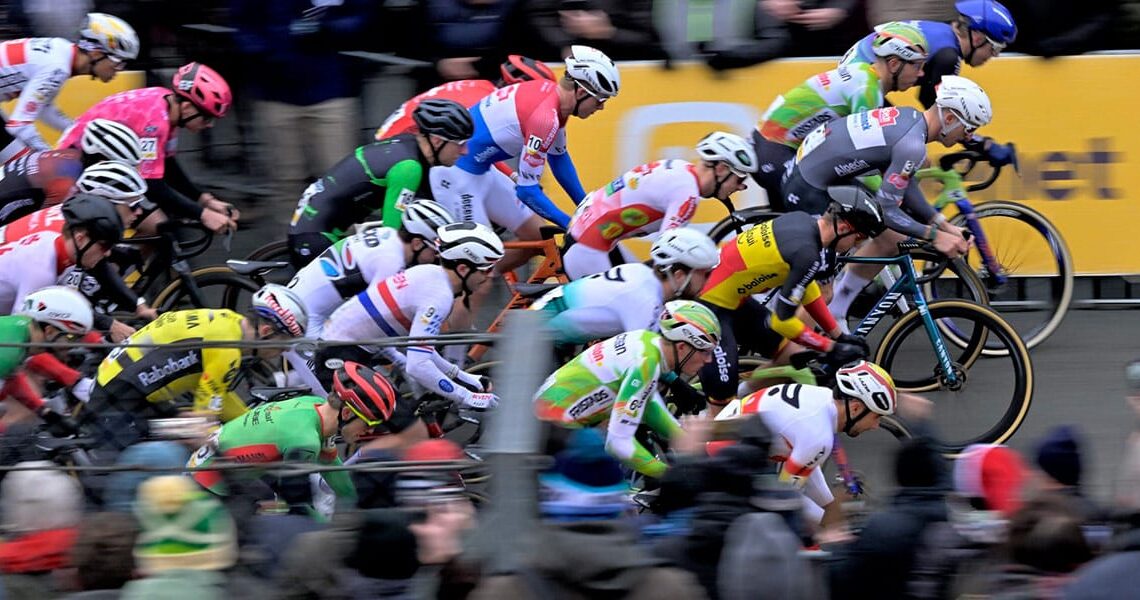
The European cyclocross calendar is stacked for the next two weeks, and starting from this past weekend, five World Cups will have been completed with a further six races coming in the Belgian X²O Badkamers and Telenet Superprestige series. In other words, it’s a great time to be alive if you’re a fan of the sport, especially as the Mathieu van der Poel vs. Wout Van Aert rivalry is revving back up and the women’s field starts to catch up with Lucinda Brand’s white-hot form. Van der Poel and Brand swept their respective races again over the weekend and into Monday. Van Aert seems to slowly be finding his legs after a rough start to his CX racing season and improved from 7th place at Antwerp to finish 2nd at Hofstade, although still roughly 50 seconds off Van der Poel’s pace. Lucinda Brand dominated her races, but the top 10 riders behind seem to be sorting out their fitness rapidly with Carmen Ceylin del Alvarado and especially Brand’s teammate Shirin van Anrooij all showing podium form.

The Pressures Faced by Pro Riders
Dutch star and current women’s world champion, Fem van Empel, unfortunately won’t be part of that racing narrative as she and her Visma-Lease a Bike team have agreed to annul her contract as of January 1, 2026, allowing her to step away from the sport for an unspecified period and focus on her well-being. Van Empel started the season with promise, winning two Dutch events before illness and a DNF at the Koppenberg race derailed her. However, it appears that much more was going on in 23 year-old Van Empel’s life than form or health; she had previously taken a break from her road career during the spring, but that may not have been enough to reset and rekindle her focus – the passion was missing and in her own words, “both the motivation and the enjoyment I have had in cycling for years are missing.” Several riders – men and women – have taken unforeseen leaves from professional cycling while at the height of their career trajectories, but Van Empel’s decision is perhaps the most consequential: she is a three-time world champion, and widely respected as a star of the future in every road discipline.

A deeper dive into the life of a top professional rider provides context as to why personal well-being and sporting expectations often clash. The past few seasons has seen an increase in the number of riders using social media platforms to build broader personal brand/sponsor marketing presences and this has proven to be beneficial for athletes to differentiate themselves from their team identities and connect with audiences outside of cycling’s narrow revenue lane. One of the more insightful, personal, and sportingly honest representations has been built by Dutch all-arounder Puck Pieterse. Her recent personal vlog from Fenix–Deceuninck’s Spanish training camp bears further examination – from precisely measuring carbohydrate to protein ratios and adhering to strict ride refuelling parameters, to time-boxed gym work, oxygen consumption tests, and a literal demand to have quality sleep despite the stress. All of this contributes to a lifestyle of watching clocks, waistlines, and power meters with little time to build a life outside of the cycling workplace. This is especially true for many pro women – some of whom have even been notoriously bullied over their weight by unscrupulous coaches in the past.

Pieterse’s view into her life as a pro builds greater appreciation to the sacrifices and payoffs as a top rider, and greater affinity and trust in her as a brand ambassador. At the same time, it gives pause to consider the internal and external stressors shouldered by world champion Van Empel and a greater appreciation for her decision to step away to find personal happiness and a new path forward – her own, not that of a team or sponsor. More generally, when we look at the entire context of pro cycling as an ecosystem of people – not just money, fans, big races, and trophies – more should be invested in the well-being of athletes beyond accredited coaches, physiological specialists, nutritionists, and mechanics. It mostly falls on the backs of riders and their families once the personal/professional balance is tipped over. This was also hinted at by Jonas Vingegaard during a recent interview. There is no standard of psychological care in cycling and many other sports, and the time may be fast approaching when that is a requisite, not an option.
Private Equity Begins to Enter College Sports
There has been a lot of speculation concerning private equity investment in college sports, but the last few saw the first concrete investor steps in that direction. The University of Utah brought in a private investment fund, Otro Capital, to help manage its various sports endeavors in the face of rapid change. A new jointly-owned company, Utah Brands & Entertainment, would handle ticketing, events, sponsorships, and NIL money-raising, whereas the school would remain in control of decisions like hiring/firing coaches and scheduling. Increased revenues will supposedly be realized via greater focus in these respective business disciplines. The company would be chaired by the university’s athletic director with a majority of board members from the university and its foundation; the investment firm would have minority board representation. Although there were few specific figures released, reports suggested that Otro’s minority stake would comprise a nine-figure investment and smaller shares would also be made available to individual university boosters and alumni.
The ever-accelerating economic demands in the sports marketplace demand constant change. As a second-tier university, Utah felt that it needed to do something like this in order to survive the upheaval caused by NIL, athlete pay, and bloated TV deals; other schools and even conferences are likely to follow suit before long. However, the deal raises several questions: private equity firms invest to make money, whereas the objectives of state-administered public universities are obviously quite a bit broader. How will these much higher financial returns actually be generated? If it is that easy to generate higher returns, why hasn’t Utah already done so? And what happens if the venture doesn’t make as much money as planned? Although university administrators said they could veto sponsorship opportunities that “don’t align with its values,” how would that work in practice? It will be interesting to see how these initial private capital arrangements work out – we sense that it could be a bumpy road and inform other sports’ PE strategies in the future.
Editors’ Note: Thank you for reading and supporting the AIRmail newsletter this year. Your coverage ideas, inputs and critiques are invaluable as we continue to try to highlight the important stories, shine a light on areas overlooked by the rest of the cycling media, and summarize pro cycling’s role and meaning within the broader context of global sport. We’ll rejoin you in early January. Thank you.
Steve Maxwell, Joe Harris, Spencer Martin
Written and Edited by Steve Maxwell / Joe Harris / Spencer Martin
The post Pro Cycling’s Changing Landscape: Contract Buy-Outs, Power Shifts, and Athlete Pressure | OUTER LINE appeared first on PezCycling News.