
Mathieu van der Poel is on fire for the Classics and Jonas Vingegaard quietly dismantled rivals in Catalunya, pro cycling’s established stars are reasserting their grip just as the stakes rise. But beneath the results, something else is shifting: the peloton is getting smarter, long-range attacks are no longer a guaranteed path to victory, and the sport itself is evolving—from mandatory GPS tracking to the growing influence of betting markets and a deeper look at cycling’s economic engine. This week’s AIRmail dives into what’s really shaping the future of pro cycling.
Analysis, Insight, and Reflections from The Outer Line.
# Catch up on pro cycling – and its context within the broader world of sports – with AIRmail … Analysis, Insight and Reflections from The Outer Line. You can subscribe to AIRmail here, and check out The Outer Line’s extensive library of articles on the governance and economics of cycling here. #
Key Takeaways
● Established Stars Reassert Their Control
● Is the Peloton Getting Smarter About Long Solo Breakaways?
● “The Peloton Economy” – A New Analysis of the Pro Cycling Business
● UCI Will Make GPS Trackers Mandatory …. Finally
● Another New Record For Women’s Sports
● How is Betting Changing Sports?
 Another win for van der Poel at the E3 Saxo Classic
The pro cycling season progresses toward some of the biggest races of the year as does the form of some of its biggest stars. Mathieu van der Poel won Friday’s E3 Saxo Classic event and then played a decisive role on Sunday at Flanders Field/Gent-Wevelgem, where he helped deliver his Alpecin-Premier Tech teammate Jasper Philipsen to a sprint victory. Philipsen survived out of a big-name breakaway including Van der Poel and Wout van Aert. Meanwhile, in Catalunya, Jonas Vingegaard quietly dismantled a deep field of stage racing contenders with his hallmark measured efficiency, putting a serious dent in the Grand Tour hopes of rivals like Remco Evenepoel and João Almeida. The sport’s established stars have reasserted control after an early stretch of the season that hinted at a youth-driven shakeup via breakout performances from riders like Isaac del Toro and Paul Seixas.

But the stakes have risen as the relative significance of the races has grown – and cycling’s biggest events are again being dominated by a handful of top stars. This could quickly turn into a serious concern for those teams which spent massive amounts of money during the off-season to acquire top talent in the volatile transfer market. In particular, such concerns could apply to Red Bull-Bora-Hansgrohe, which brought over Remco Evenepoel with a massive salary and buyout fee in the hopes they could challenge the sport’s GC duopoly of Visma-Lease a Bike and UAE. Meanwhile, those two teams have now won 22 out of the last 24 major one-week stage races, and eight out of the last nine Grand Tours. Notably, Evenepoel is still without a win at a top-seven one-week stage race, or a podium finish in a WorldTour stage race since the 2024 Tour de France. If this trend continues through the summer, there will soon be a lot of second-guessers around the “buy strategy” of several teams during the past off-season.

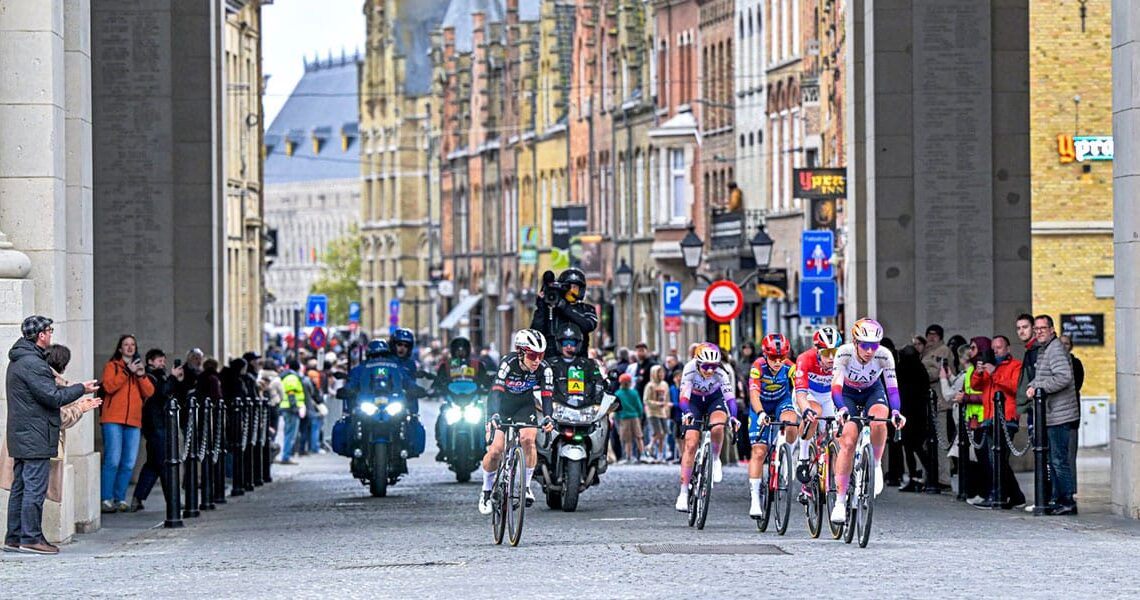
Even though the top one-day races over the weekend were won by the familiar Philipsen and Van der Poel duo, the way those wins are being achieved hints at a broader tactical evolution. After several seasons where many races were determined by long-range solo attacks, often enabled by disorganized or hesitant chasing, the peloton appear sto be getting smarter, more coordinated, and more willing to commit to the collective interest. The Gent-Wevelgem finale was a perfect example: despite the star power and horsepower of the Van der Poel/Van Aert move, the bunch didn’t panic, staying organized enough to neutralize it and set up a reduced sprint rather than concede the race. Combined with Mads Pedersen’s Lidl-Trek team nearly reeling in Tadej Pogačar at Milan-San Remo, a possible trend could be emerging. To wit, the peloton is becoming increasingly aware of how races are won, and, just as importantly, how they are lost. This result could mean that it may be harder, even for Tadej Pogačar, to bend races to their will by riding clear whenever – and as early as – they see fit.

There was news this week that the UCI is finally taking the step of making GPS trackers mandatory for every rider in every major race. Apparently, the new requirement will be phased in over time at different racing levels, but will eventually be mandatory across all categories. Pressure to use such tracking devices mounted more than eighteen months ago when Swiss rider Muriel Ferrer died of a head injury after laying unnoticed for approximately 82 minutes after a serious crash at the World Championships. Why it took this long for such a simple innovation to be adopted is a serious question, but at least it now appears that such tracking will soon become customary. There still remain questions as to what sorts of information will be provided to what regulatory or officiating bodies. For example, there are long-standing questions about the technology selection process, testing acceptance criteria, and why the tracking is bike-centric; rider-specific crash data is obviously more valuable in an emergency response and subsequent injury evaluation protocol. Regardless, the issue is now in front of the teams and the riders union, and will be discussed at a May UCI meeting of the Professional Cycling Council.

Women’s sport saw another new highlight this past weekend, as more than 63,000 people poured into Denver’s Empower Field to watch the inaugural home game of the new NWSL Denver Summit FC team. This was the largest crowd ever assembled for a women’s pro soccer game in the United States, and broke the old NWSL record, set last year, by more than fifty percent. Fans saw the new team fight to a scoreless draw against the Washington Spirit. The women’s FIFA World Cup final in 1999, played in the Rose Bowl and – featuring legendary stars like Mia Hamm, Brandi Chastain and Julie Foudy – attracted over 90,000 fans; the largest women’s sporting event of any type ever held in the country was the Nebraska vs. Omaha women’s volleyball match held in August of 2023 in the University of Nebraska football stadium, drawing over 92,000 fans. Last weekend’s event only underscored the vast and growing potential of well-organized women’s sports leagues, and with anticipation growing for the upcoming WNBA season now that the CBA has been resolved and two new expansion teams joining that league soon, the trajectory is heading into new and record territory. One hopes that the sentiment bolsters interest in the UCI’s Women’s WorldTour, too.

Sports economies continue to diversify in multiple directions, none more polarizing than the established online wagering platforms and the emerging prediction markets. Professional cycling has had a long love-hate history with betting, particularly when such firms sponsor teams or events, and the possibility of betting on race outcomes undoubtedly has the potential to attract new fans from outside cycling’s typical demographics. However, regulatory and legal battles are already being fought to curtail what many analysts believe are predatory and addiction-encouraging patterns that are built into wagering apps. Gambling addiction is a pervasive social scourge that has been spiking in recent years due to the accessibility, popularity, and sophisticated psychological “gamification” of betting apps.

The so-called “prediction markets” present a more complex problem that regulatory bodies and legislation may play a hand in shaping in the coming year. These platforms allow participants to create “contracts” that relate to the hypothetical or mathematical outcome of an event, paying out only if the event happens. Other platform users can wager on that same contract, essentially creating a type of bet on the outcome’s probability. However, prediction markets are no less vulnerable to manipulation than traditional betting. Indeed, they may be more susceptible to the ability of wagering partners to rig the outcome, or be party to insider information that the event will happen – which happens to be central to the U.S. regulatory fight underway. U.S. sports leagues are taking a proactive – if not schizophrenic approach – to the prediction market discourse by signing partnerships with key players like Kalshi and Polymarket, while also asking these firms to take action to prevent or cancel easily manipulated contracts from being wagered in the first place. With wider discussion taking place on how to shape the future of professional cycling, traditional and prediction market wagering may come back into focus and stakeholders look for ways to bolster flagging viewership, aging demographics, and an outdated consumer entertainment experience.
On that note of change and opportunity, ex-road racer and current gravel racing privateer Joe Laverick released a detailed analysis about the business of pro cycling, entitled “The Peloton Economy.” The young racer has gradually carved out a name for himself for his frank and unfiltered analysis of the current status of the sport, written from the inside perspective. In his 15,000-word assessment of where pro cycling stands today, Laverick tries to draw attention to the central criticality of building the sport’s fanbase, as a prerequisite to all the other changes and modernization that the sport desperately needs. Given the UCI’s recent call for new ideas and strategies to guide the future growth of cycling, this is a timely analysis. Laverick draws heavily upon the original Rapha Roadmap, published in 2019, which proposed a number of changes to improve the economics and growth potential of the sport. (Note: Authors of The Outer Line were two of the Rapha Report’s four original authors, and will shortly be collaborating with Laverick to publish a revised analysis and concise set of updated recommendations in response to the UCI’s recent outreach.)
Written and Edited by Steve Maxwell / Joe Harris / Spencer Martin
THE OUTER LINE
www.theouterline.com
@theouterline
Visit our website for our latest articles and commentary. And check out our extensive Article Library for hundreds of in-depth articles about the economics, governance, structure and competition of pro cycling, organized by subject. (Advisory Group: Peter Abraham, Luke Beatty, Brian Cookson OBE, Nicola Cranmer, Prof. Roger Pielke, Jr., Dr. Bill Apollo and Prof. Daam Van Reeth.)
The post Pro Cycling Power Shift: Stars Dominate, Smarter Peloton & The Business of Racing | The Outer Line appeared first on PezCycling News.