
This week’s edition of AIRmail from The Outer Line dives deep into the most compelling stories shaping professional cycling and the wider world of sport. From Tadej Pogačar’s historic fifth straight Il Lombardia victory and the debate over whether course design—not dominance—is cycling’s real problem, to Rwanda’s post-Worlds political maneuvers, the ongoing fallout from the “Kawhi Case,” and fresh questions about sportswashing, athlete rights, and media metrics, the newsletter connects the dots between racing, governance, and global impact. Plus: insight on gravel’s identity crisis, a new chapter in the Wiggins “Jiffy-gate” saga, and what it all means for the future of elite sport.
# Check out the weekly commentary on pro cycling – and its context within the broader world of sports – with AIRmail … Analysis, Insight and Reflections from The Outer Line. You can subscribe to AIRmail here, and check out The Outer Line’s extensive library of articles on the governance and economics of cycling here. #
Key Takeaways:
● The Most Dominant Season Ever?
● Is Pog the “Problem” or is it Course Design?
● Tens Days After Worlds, Rwanda Eyes Congo’s Capital
● Home-Grown Sportswashing
● Gravel Worlds: Did They Matter?
● New Wiggins Book Revives “Jiffy-gate” Debate

Tadej Pogačar closed out his 2025 campaign over the weekend by winning his fifth consecutive Il Lombardia, cementing what may go down as the most impressive season in modern cycling history. He became the first rider ever to finish on the podium at all five Monuments in a single year, added a 10th such trophy to his collection, and won a staggering 40 percent of the races he started. In short, Pogačar has effectively “hacked” professional cycling with his superior fitness and bold racing style. In fact, the Slovenian now has just four missing jewels left to surpass Eddy Merckx’s career résumé: the Vuelta a España, Milan-Sanremo, Paris-Roubaix, and the Olympic road race. More striking still, he is on pace to match Merckx’s record 19 Monument victories by the age of 30, the same age at which the Belgian great lifted his final Monument trophy.

As is often the case when a sport is thoroughly dominated by one individual or team, grumbles are gathering momentum, coming from fans decrying predictable and boring outcomes. But when you zoom out, Pogačar’s reign isn’t so unusual in the context of modern sport. For example, over the last four years, only four male players have won sixteen contested tennis majors, and only seven teams have won the UEFA Champions League competition in the previous 15 years. This is roughly similar to pro cycling’s tally of six riders winning the last 20 Monuments. But, in other sports, era-defining dominance from a singular team or player is often celebrated as a touchstone of greatness. Meanwhile, in cycling, such dominance is often derided or viewed with suspicion (although members of tennis’ elite winning circle have been tripped up on doping charges more frequently than elite cyclists have in recent years). This “X” factor of trust will be one factor in fan viewership downturn among many others we will continue to explore as viewing metrics are published and analyzed during this road racing off-season.
 Wout van Aert about to drop Tadej Pogacar in Paris.
But if there is a real problem, perhaps it lies less with Pogačar himself than with course design proffered by race organizers. Over the past decade, laziness and groupthink have led many of cycling’s most prestigious races to shift toward longer, steeper, and hillier courses – with the assumption that harder courses equal better racing. The result is that the sport has created a near-perfect laboratory for Pogačar’s across-the-board superiority in climbing and endurance. By contrast, the races where he was pushed to his limits or even defeated in 2025 were those with flatter, and – as a result – more chaotic profiles: Milan-Sanremo, Paris-Roubaix, Amstel Gold, and the Champs-Élysées finale of the Tour. Yet with this seeming “arms race” between race organizers to tilt the calendar toward relentless climbing, riders like Wout van Aert (the only man to drop Pogačar this season) and Mathieu van der Poel (one of just three riders to beat him in 2025) have decided that they simply can’t compete. They have decided that enough is enough, and skipped the final month of racing altogether. This kind of talent drain is far more concerning than Pogačar’s brilliance, and highlights a major issue in the modern sport.
It did not take long for Rwanda to pivot from its successful hosting of the UCI road racing World Championships to start making significant regional political and military power plays. As we feared in last week’s AIRmail, barely ten days after the men’s road race concluded, the leader of the M23 rebellion in the Democratic Republic of Congo – a group widely recognized to be the paramilitary extension of Rwanda’s army – announced that it would march on the Congolese capital city of Kinshasa to overthrow the government. Many in the international community believe that this development could simply be “saber-rattling” to force concessions in yet-to-be-initiated peace talks regarding valuable territory that M23 seized in the Kivu area of the DRC. However, saber-rattling may have also been a key Rwandan sportswashing objective in hosting the WCs last month: to bolster national pride, recruit fighters, and embolden actions to annex the Kivu’s arable land and mining reserves. With 16,000 newly trained M23 recruits being positioned and an estimated 10,000 Rwandan troops on the ground – and the DRC army positioning likewise – there’s a new powder-keg ready to ignite in a region already locked in a long cycle of violence. Cycling and the “neutrality of sport,” like the 2018 FIFA World Cup did for Russia prior to invading Ukraine, has done little to carry a message of peace for a host nation long-focused on ulterior motives.

In other international developments, the hostage stand-down and peace talks in the Middle East may defuse global tensions with Israel, although perhaps not to the extent that the country’s name will reappear on a WorldTour team jersey anytime soon. And it seems not to the benefit of Canadian star rider Derek Gee, who is being sued for defamation and damages by his former team, formerly known as Israel-Premier Tech. Gee unilaterally broke his contract in September but the team, controlled by Canadian-Israeli billionaire Sylvan Adams, has already referred the case to the UCI for contract arbitration, to the tune of €30 million Euros in damages. On one hand, the team may have legitimate procedural and legal grounds to demand punitive recompense for Gee’s actions. On the other hand, Gee may have legitimate personal and professionally-sound reasons to justify breaking the contract. Regardless of the UCI’s ruling, the case seems tailor made to land in the Court of Arbitration for Sport (CAS) due to the sensitivity of the conflict, wide-ranging impacts to sporting law precedent, and potential ramifications for how nation-states sponsor athletic teams in which the athletes are not beholden to the sponsor’s political agenda or regime’s authority. While the situation appears tenuous, the outcome could clarify athlete and team employer rights in a meaningful way as more nation-states seek high profile investments in global sports.
The premier international conference bringing together sports governance officials and experts – the Play the Game conference – was held last week in Finland. Although The Outer Line was unable to attend this year, the conference highlighted a number of critical issues, concerns and controversies in the current world of sport. Among the keynote addresses, Finnish Member of Parliament Sandra Bergqvist spoke about doping, the increasing focus on money in sport and the planned “Enhanced Games” warning that “greed can tempt us with faster results, bigger sponsorships, and short-term gains – but fairness must weigh heavier.” Nick McGeehan of FairGame discussed a long list of governance failures in international football, concluding that “FIFA is so badly governed that all we can do is continue to highlight the rottenness.” Various academics and human rights experts argued that the U.S. government is increasingly using sport to deflect domestic criticism and dissent – an emerging form of homegrown “sportswashing” – and campaigned for stronger oversight and ethical standards. Minky Worden, director of global initiatives at Human Rights Watch, highlighted immigration and visa concerns around the coming World Cup, and said “FIFA has the leverage to address this and to pressure Trump’s administration to roll back on this pernicious visa policy. This World Cup should not be a human rights crisis zone.”

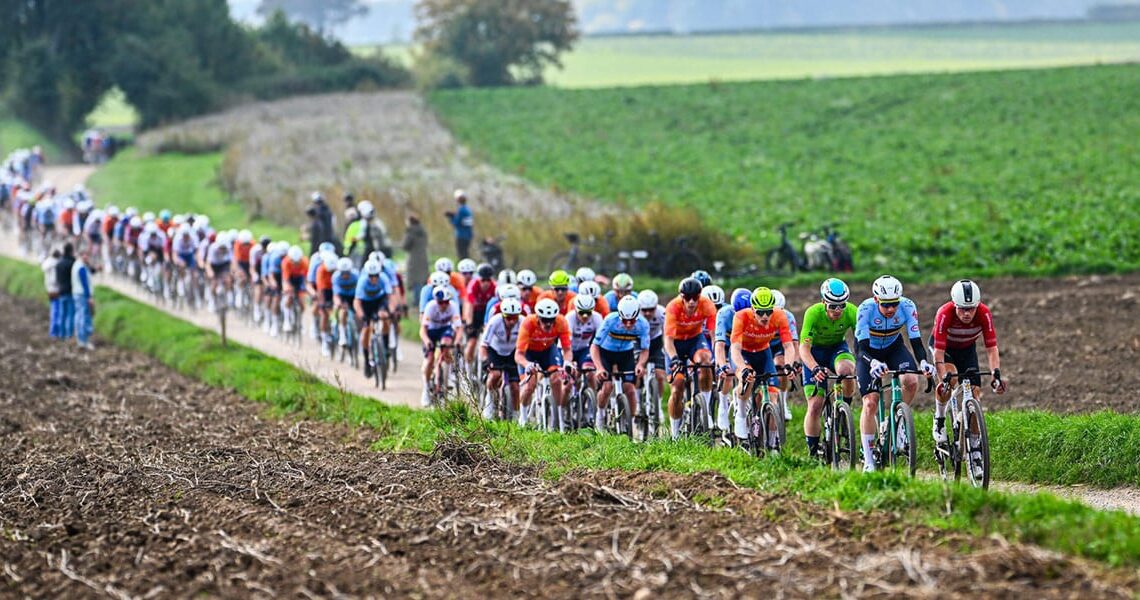
The UCI Gravel World Championships concluded this past weekend, but with due respect to the race winners across all the age-graded categories, did it really matter to gravel racing fans? Other than the Dutch team drama in which Shirin van Anrooij aired legitimate beef with her team for chasing her down when she was in position to win the women’s race, there didn’t seem much to cover. This sentiment has been building as the UCI continues to push its Euro-centric branded gravel race series (licensing the UCI branding and designation to participating race promoters) – races that often feel more like dirt criteriums than tests of unpaved racing mettle. Spiritually, gravel remains the domain of privateers in series like the Life Time Grand Prix and its iconic affiliated event, UNBOUND. However, the UCI owns the rights to confer a World Champion’s rainbow jersey per its Olympic charter, and by staging its own championship race on a new course each year, has the ability to rapidly steer the discipline out from under its grassroots founders. There are both good and bad potential outcomes of this new juxtaposition of an old problem in cycling.
By internationalizing the discipline, the UCI hopes to build up the sport in new regions and simultaneously increase cycling participation. But this win-win is a trap cycling’s historians recognize immediately: the focus on European races and host locations caters to an established market. Cycling is already anchored in those spaces, and the fans and participants aren’t new to cycling but are new to the discipline. This factor was a big reason why mountain bike racing peaked quickly and then stagnated for many years after the UCI subsumed it into a European-based “World Cup” sport in the late 1990s and early ‘00s. Many observers aren’t convinced that this most recent crop of rainbow winners would be capable of winning at UNBOUND given the true level of specialization for such rugged events (and most of the big names who raced in Limburg last weekend would steer clear of UNBOUND’s overlap with the higher-priority WorldTour early summer calendar). And this will undoubtedly fuel debate up until next year’s gravel world’s – or at least until the next edition of France’s Tro-Bro Léon, which is already considered to be European racing’s most legitimately challenging gravel race despite being a UCI ProSeries road event.

Years-old allegations about the Team Sky “marginal gains” programs, the “Jiffy-gate” scandal, and allegations of team doping during the team’s run of dominance in the early 2010s are surfacing again, in advance of the publication of Bradley Wiggins’ new book – The Chain. Claiming that the team “chucked him under the bus” Wiggins revisits the episode again, and the long and tortuous investigation which not only marred his extensive accomplishments in both track and road racing, but which also led to the banning of team doctor Richard Freeman. Although Wiggins openly and honestly discusses his former drug and alcohol dependency problems, as well as the impacts of being abused as a younger athlete, he has now cleaned up his act, is financially secure, and proclaims his innocence in the whole Jiffy-gate affair, saying “I would love to know one way or another what actually happened.” While many have written off Wiggins due to his past controversies, he has shown remarkable resiliency and resolve to chart a new course for himself – and potentially have a successful second act in cycling.
Written and Edited by Steve Maxwell / Joe Harris / Spencer Martin
THE OUTER LINE
www.theouterline.com
@theouterline
Visit our website for our latest articles and commentary. And check out our extensive Article Library for hundreds of in-depth articles about the economics, governance, structure and competition of pro cycling, organized by subject. (Advisory Group: Peter Abraham, Luke Beatty, Brian Cookson OBE, Nicola Cranmer, Prof. Roger Pielke, Jr., Dr. Bill Apollo and Prof. Daam Van Reeth.)
The post Pogačar’s Dominance, Rwanda’s Power Play, and Sport’s Global Shifts | The Outer Line AIRmail Weekly appeared first on PezCycling News.