
The 2026 season is already testing pro cycling’s hierarchy. This edition of AIRmail from The Outer Line analyzes how emerging talents are pressuring an increasingly concentrated elite order, while established superstars refine their form away from the spotlight, plus reform signals from UCI President David Lappartient, exploring what Norway’s extraordinary Winter Olympic dominance reveals about sports development models, and assess what shifting global viewership trends could mean for cycling’s commercial future.
Analysis, Insight, and Reflections from The Outer Line.
# Catch up on pro cycling – and its context within the broader world of sports – with AIRmail … Analysis, Insight and Reflections from The Outer Line. You can subscribe to AIRmail here, and check out The Outer Line’s extensive library of articles on the governance and economics of cycling here. #
Key Takeaways:
● Younger Star Wannabes Shine While Superstars Continue Training
● UCI Opens New Dialog for Change
● Norway’s Absurd Domination of the Winter Olympics
● How Exactly Does Norway Excel at Such a Level?
● Viewership Booms at Winter Olympics
 Paul Seixas lit up the early season action at Algarve
The 2026 cycling season continued to heat up over the weekend, with multiple races providing the first real fireworks – and the first meaningful stress test on cycling’s increasingly exclusive hierarchy. Most of the sport’s true superpowers opted to continue training away in altitude camps; however, the absence of Tadej Pogačar, Jonas Vingegaard, Mathieu van der Poel and the rest of the established titans did little to dampen the action. (As we have mentioned in the past, just four riders have accounted for the last 22 major one-day victories and three teams have swept the previous six Grand Tours; hence, pro cycling has begun to feel almost pre-scripted, its hierarchy rigid and difficult to crack.) Hence, the racing that unfolded across different continents this past week offered some refreshing and significant insights – a glimpse of what spring might look like in the future when the next wave of star riders begins to pressure and perhaps crack the elite order we’ve gotten used to today.

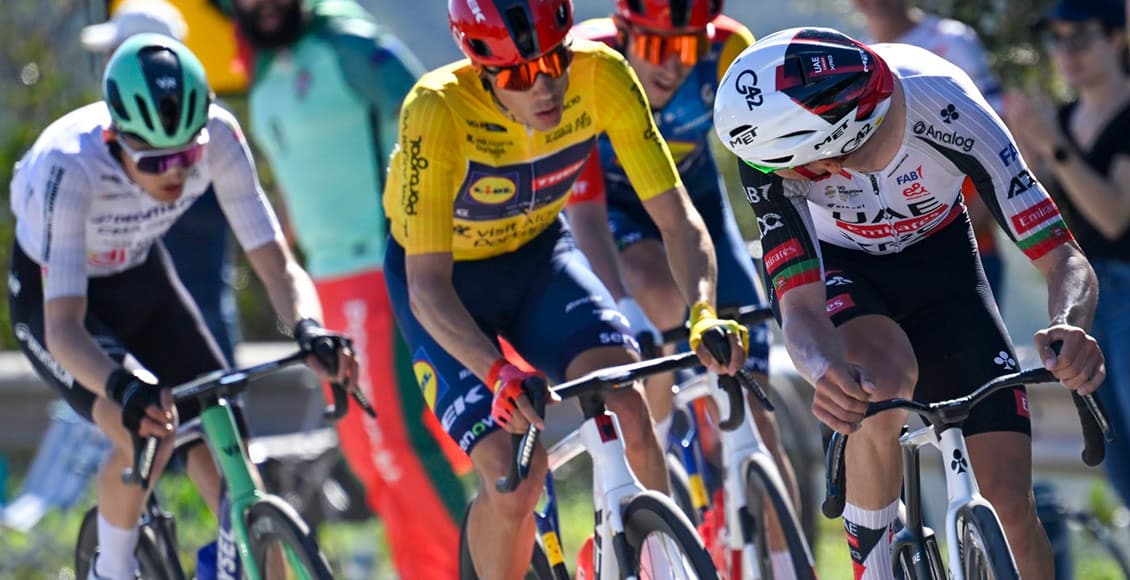
This new generation of potential stars battled at the Volta ao Algarve last week and Lidl-Trek’s new big-money off-season transfer, Juan Ayuso (rumored to have cost the team a €10 million fee) did not disappoint. He and Decathlon’s teenage prodigy Paul Seixas battled each other for the overall victory, relegating UAE’s João Almeida to third place in the process. Ayuso looked on track to step comfortably into the added responsibilities of sole team leadership, and the 19-year-old Seixas displayed the composure and explosiveness of a rider accelerating on his own timeline, winning the Stage 2 summit finish and holding his own in the time trial the following day. In parallel, Isaac del Toro’s clinical win at the UAE Tour was delivered with such calm authority that it evoked images of a Pogačar heir-in-waiting. And the fields felt different just below the headline acts as well; young American Matthew Riccitello rode with the conviction of someone ready to break into the sport’s upper tier alongside Seixas at Decathlon, while Ineos’ new signing Kévin Vauquelin continued to hint that France’s wait for a stage racing presence may not rest solely on Seixas’ shoulders.

One of the most remarkable stories to come out of the recently wrapped Winter Olympics was the manner in which the tiny country of Norway completely dominated the medal standings. With a population of just 5.6 million – less than the state of Colorado, or the city of Atlanta – the Norwegians put on a display rarely seen in sports. (When we last analyzed this phenomenon it was with respect to the absurdly outsized impact that Slovenia has in terms of major sports – particularly cycling.) Norway walked away with more than 50% more gold medals and eight more total medals than the next closest country in either category – the U.S., with its population of almost 350 million, or seventy times that of Norway. This was not unexpected, as Norway also dominated the last two Winter Games, and has won a total of 405 Winter Olympic medals, including 148 golds, over its history – considerably more than any other nation. Men’s snow athletes delivered most of the victories, so perhaps Norway still has room for improvement and diversification. In terms of medal count per million of population, it topped 7.4, while Switzerland stood at 2.6, and both Slovenia and Austria came in at about 2.0. When the 3-2-1 medal weighting system is used, Norway outperformed its closest rival by about a factor of 4 – remarkable by any standard.
Perhaps of more interest, is exactly how Norway has been able to consistently achieve this level of performance. Among other things, according to one detailed report, Norway’s youth sports system model looks radically different – and would seem almost like anathema or an abomination from the general American perspective: “… no scorekeeping until age 13, participation trophies for everyone, no travel teams, no early specialization, no national championships for children, no online rankings, and an annual cost that typically doesn’t exceed $1,000 per child.” This combination of low pressure competitive freedom and accessibility yields a youth sports participation rate of over 90%, almost twice that of the U.S. It’s also worth noting that Norway’s success is not limited to snow sports – it also produces a number of top international stars in other sports like golf, soccer and tennis. It may be worth analyzing whether this model has any implications or lessons for the way in which junior cycling programs are run in the U.S. in the future
Viewership of the recently-concluded Games was an apparently miraculous turnaround for broadcasters globally – none more so than for NBC in the all-important U.S. market. With apparently almost twice the viewership numbers of the 2022 Beijing Games – the events were highlighted by Canada-USA sudden-death showdowns in both men’s and women’s ice hockey, Alysa Liu’s gold medal performance in figure skating, and incredibly competitive finales in speedskating, freestyle, downhill and cross-country skiing. The figures were no doubt helped by a less-disruptive time zone broadcasting schedule. Innovative and cohesive use of drones to capture in-action content in concert with fixed camera positions delivered new and drama-enhancing cinematics for fans. This technical achievement not only helped to deliver compelling live coverage but also added to climactic, story-rich nightly recaps that were worth the viewing even if the results were already widely known. And newly enhanced Nielsen “Big Data” metrics helped broadcast teams tweak the content delivery formula in near real-time to maximize the fan experience.

However, the influence of that new Nielsen data will face some scrutiny in the coming months, as it has come to light that its measurements of the 2026 Super Bowl were off the mark. While the event still scored highly, it missed the prior year’s tally (127.7 vs. 125.6 million viewers), especially when factoring Nielsen’s new methodology to “accurately” capture streaming viewers and multi-party household viewing. It raises the question if other ratings adjustments are coming to prior televised events which used the Big Data approach and – if the impacts are significant – could that tamp down enthusiasm for increases in advertising rates. With Major League Baseball about to go into collective bargaining negotiations with the players’ union over salary caps and revenue sharing, and with the NFL looking to re-compete its licensing rights early, it could lead to important changes on the horizon.
All of this, however, highlights a core problem which persists for cycling and other niche sports: as “major” sports consume more and more of broadcaster investment commitments, niche sports will continue to lag in both traditional linear TV air time and the potential for other types of broadcast revenues. An excellent example of this was served up in the Olympics via the controversy and competition in curling – a niche sport that only seems to rear its global presence every four years and subsequently refocuses to a tiny but dedicated core fan base in the interim period. With cyclocross making its winter Games debut (albeit as a demonstration sport) in the 2030 French Alps edition, one hopes that cycling can focus on the opportunity to popularize a niche competitive genre in the lead-up to an Olympic showcase. Such an approach could build the sport up from a demonstration event and challenge for a more permanent and globally visible slot in future Winter Games.
That conundrum of breaking through from niche sport to global presence was illustrated – laid bare? – last week, when UCI President David Lappartient sent out an open solicitation seeking ideas on changes and new strategic directions for the sport. The letter was addressed to stakeholders across the sport’s road racing landscape – from governance body CEOs, to team owners and managers, race organizers and riders. In it, Lappartient asked for input regarding changes in the calendar, business model, financial support, fan engagement, safety, and sporting integrity that could help to grow and elevate the sport. (One could ask why it took Lappartient eight years and two Presidential terms to finally ask these tough questions in an open forum.) Already, top riders like Demi Vollering are expressing their thoughts on the topics in social media to seed constructive dialog.
Lappartient’s track record thus far has been marked by some advances (governance “marginal gains?”) to create promotion/relegation pathways in the Pro and WorldTour structure, while also rapidly delivering changes to accelerate the Women’s WorldTour. In our view, however, he has taken a less collaborative approach to other key reform topics – often making decisions that seem to favor ASO’s dominant position in the sport, or attempting to improve areas like safety or governance without sufficient input from the bodies that these changes would ultimately and directly impact – sometimes while posting social media commentary deriding his detractors.
From a timing perspective, the decision to open the doors for more input and suggestions may be a reflection of the actual time and focus Lappartient has put into cycling since attaining the Presidency. He has long been criticized for not divesting his numerous other political and business commitments in order to fully focus on cycling, often delegating or outsourcing critical tasks to external third parties. His ill-fated run for President of the IOC in 2024 (on the heels of the Paris Olympics, where he spent much of the year helping to organize the Games) has perhaps led him to the conclusion that he needs to accomplish bigger things in cycling if he is to ever challenge again for Olympic power. If so, maybe that will provide an opportunity for cycling to more seriously consider or implement long overdue changes and upgrades.
With respect to needed changes in pro cycling, we would invite readers to revisit our various past special reports and in-depth articles which provide detailed proposals for reforming most of the areas and aspects of the sport solicited by the UCI. We believe there are numerous and viable alternatives to pro cycling’s traditional models and decision-making processes that could reinvent the sport for modern audiences while still serving more purist or legacy fans. Many of these ideas and proposals were summarized in our comprehensive 2018 Rapha Roadmap Report, which we wrote and produced with the cycling apparel company. (All of our analysis and historical articles in terms of reforming pro cycling are freely available on our main site at The Outer Line, and via special editions of our newsletter here on Substack.)
Written and Edited by Steve Maxwell / Joe Harris / Spencer Martin
THE OUTER LINE
www.theouterline.com
@theouterline
Visit our website for our latest articles and commentary. And check out our extensive Article Library for hundreds of in-depth articles about the economics, governance, structure and competition of pro cycling, organized by subject. (Advisory Group: Peter Abraham, Luke Beatty, Brian Cookson OBE, Nicola Cranmer, Prof. Roger Pielke, Jr., Dr. Bill Apollo and Prof. Daam Van Reeth.)
The post OUTERLINE | Pro Cycling Analysis: Young Stars, UCI Reform & Olympic Lessons appeared first on PezCycling News.