
The 2025 pro cycling off-season has already delivered more drama than many races did all year. From the surprise withdrawal of Premier Tech’s sponsorship of Israel–Premier Tech, to the growing financial strain on mid-tier WorldTour teams, to the evolving battle between Strava and Garmin ahead of a major IPO, the business and governance side of the sport is shifting rapidly. Meanwhile, USA Cycling launches its Olympic fundraising push, and fresh betting scandals in other sports remind us of the fragile line between competition and commerce. In this week’s edition of AIRmail — Analysis, Insight, and Reflections from The Outer Line — we unpack the key developments shaping the global cycling ecosystem, and explore how they reflect broader trends in the world of sport.
Analysis, Insight, and Reflections from The Outer Line.
# Catch up on pro cycling – and its context within the broader world of sports – with AIRmail … Analysis, Insight and Reflections from The Outer Line. You can subscribe to AIRmail here, and check out The Outer Line’s extensive library of articles on the governance and economics of cycling here. #
Key Takeaways
● Premier Tech Cancels Sponsorship of Israel Team
● Mid and Lower Tier WT Teams Face Financial Crunch
● USA Cycling Kicks Off Olympic Funding Efforts
● Strava vs. Garmin, and Strava’s Planned IPO
● New Betting Scandal Hits Baseball


Last week saw the shock announcement of the off-season, with Canadian company Premier Tech declaring they would be departing as co-title backer of the Israel–Premier Tech squad, saying that their involvement with the team was “overshadowed to a point where it has become untenable for us to continue as a sponsor.” The surprising and sudden move caught everyone off-guard, as the I-PT team had already committed to a branding shift away from its prominent Israeli focus, leaning into its Canadian identity in an attempt to stave off growing pressures from both inside and outside the sport. This would have left Premier Tech, a Canadian company with a stated goal of supporting Canadian cyclists, in a prime position to take up the mantle as the team’s main sponsor for 2026. Premier Tech’s decision to walk away at this time seems to suggest that either relationships inside the ownership structure broke down (and perhaps they don’t agree with the decision of team owner Sylvan Adams to sue star Canadian rider Derek Gee for upwards of €30 million) or that they anticipate even more public disdain against the team’s Israeli association to continue into the 2026 racing season. If the team’s rebranding efforts are perceived as simply “papering over” the controversial Israeli connections, its participation in 2026 WorldTour could still be thrown into question.
 Derek Gee at the 2024 Olympics, parting ways for 2026 is another stain on the IPT brand
Whatever the reason for Premier Tech’s withdrawal, it undeniably leaves the sport in a worse spot, although Daniel Benson reported earlier today that the company may be seeking to stay in the sport and sponsor another team. In a separate development, it appeared that Jayco-AlUla was going to miss the deadline to file its UCI Bank Guarantee, but it was saved at the last minute by a cash injection from team owner Gerry Ryan (who is rumored to have spent upwards of €150 million on the team since its founding in 2012). These two recent events, and the challenges being faced by other teams make it clear that the market for sponsors willing to put up €15–20 million per year to partner with a “middle-class” WorldTour team is in short supply. In turn, this reveals just how fragile the economic foundations are for squads outside the sport’s top-tier powerhouse outfits. Teams like Israel–Premier Tech and Jayco-AlUla have respectable pedigrees and strong records of developing top riders, and although they aren’t currently challenging for overall wins at the Tour de France, if both should cease to exist the ripple effects could include a thinning of the professional peloton’s depth, fewer opportunities for rising talents, and a narrowing of the sport’s competitive base.

A review of race data from the past year highlights this extreme economic pressure on lower- and middle-rung teams. Sovereign wealth funds or large multinational firms back and own the top squads, creating a two-tier reality, defined by bank accounts and road results. As we’ve pointed out now several times, Tadej Pogačar’s UAE team nearly doubled the win total of the second-placed team, Soudal-QuickStep. But, when we dig deeper, the divide is even more extreme, with UAE winning over a quarter of every WorldTour race, and the top seven teams (UAE, Lidl-Trek, Visma, Soudal-QuickStep, Ineos, Alpecin, and Red Bull) accounting for 78% of all available WorldTour wins. Even more absurd than that lopsided number of wins, UAE had three of the top four riders in the PCS Points Rankings (Pogačar, Isaac del Toro and João Almeida). Pogačar alone won more Grand Tour overalls, stages, and one-day Monuments than his top rivals, Mathieu van der Poel, Jonas Vingegaard and Remco Evenepoel combined. Yes, Pogačar is a generational talent, or perhaps the best ever, but it also doesn’t hurt to be on a team with seemingly endless funds.

USA Cycling kicked off its fundraising for the Los Angeles 2028 Olympics with a weekend-long event in Menlo Park, California, labelled Bicycles and Bluegrass. Attendees included Olympic medalists like Kristen Faulkner, Connor Fields and Megan Jastrab, along with Paralympic medalists Samantha Bosco, Elouan Gardon and others. The various auctions held over the weekend raised nearly a million dollars. It’s a smart strategy for USAC to take the event directly to the heart of Silicon Valley as many cycling fans in that area work in the world’s most highly capitalized information services and related tech innovation sectors. And the intimate setting, with just a couple hundred people, encouraged conversations between athletes and leaders of American bike racing. At the same time, the weekend highlighted a couple challenges faced by the sport: there were very few people of color there, which reinforces the narrative that bike racing is a sport dominated by an affluent white demographic. In addition, almost no bike industry brands were present. Specialized was prominent with many people, including founder Mike Sinyard, and Zwift had a couple employees in attendance. But for an event that is launching fundraising for the LA Olympics, it was surprising how many from the bike industry chose not to attend, perhaps due to ongoing economic challenges.
Strava’s recently dropped litigation against Garmin might only be a moment of calm before the storm for control over the “endurance athletics social media” marketplace. The rift concerned app features which Garmin may have been using in violation of Strava’s patents in addition to data attribution (i.e., that a Strava user’s data came from a Garmin device). However, Strava’s service ecosystem is dependent on device level inputs from its customers, i.e., smartwatch and GPS cycling computers that brands like Garmin manufacture. Given that Strava confirmed that it would issue public stock (in an IPO) in early 2026, it seemed like the lawsuit would be settled or resolved without fanfare. As we wrote earlier, Strava has an estimated $500 million in annual revenues, has delivered features which make it the “Facebook” for recreational and professional athletes alike, and is successful at converting free subscribers into paying customers – all of which are complementary factors driving sales for devices that customers need to participate within Strava’s platform.
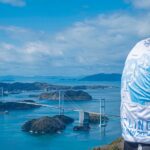
 A top ride on Strava Pez did this year while visiting & reviewing the Hotel Dory in Riccione
Suing Garmin could have inadvertently limited Strava’s IPO aspirations because it might have been compelled to disclose critical, privately-held subscriber metrics during depositions prior to issuing prospectus for stock investors. Such legal filings would have provided new insights into the actual market size, demographics, and consumer digital behaviors that might change the IPO investment climate and give competitors an advantage. The revenue ecosystem of cycling’s training platforms enabled by device producers like Garmin – and which includes the virtual riding/e-sports field enabled by Zwift, Rouvy, and Garmin’s Tackx trainers – is shifting towards social interaction of the users: comparing their performance with other riders and peers, riding with and against other users on virtual courses, and/or making social connections through broader exposure of their profile activities across multiple platforms.
Analysts have for years understood that Strava’s core consumer value can be rapidly disrupted by its competitors – who would quickly pivot with any knowledge about usage patterns and subscriber demographics to improve their products and shift market share in their direction. Garmin had already been replicating Strava components: user profiles can be set as public to show achievements, “segment” times, personal best performances, and more to foster a social ecosystem. Each of the market players already have this to a degree, and that is a critical point: they can all innovate with superior features and elevate their platform’s social media experience, potentially depriving Strava of customers and market cap. Strava likely understands its duality as a driver and a dependent regarding the device market and is taking a diplomatic approach to profitability. However, it remains to be seen whether Strava (or Zwift, for that matter) can overcome fickle seasonal customer participation and cycling’s high cost barrier for participation to grow that vertical within its business, such as the expense for a modern road bike, personal gear, and ubiquitous smart devices.

The topic of sports gambling scandals refuses to go away quietly as allegations have now hit Major League Baseball as well. Two Cleveland Guardians pitchers were indicted for fixing prop bets on the outcomes of certain pitches that allowed bettors to illegally pocket hundreds of thousands of dollars from bookmakers. While not quite in the realm of match-fixing, the illegal activity undermines the legitimacy of the prop betting market and has given sports analysts more clarity as to the many ways in which such betting can be manipulated. And that should give everyone pause to consider if, and when, regulators and prosecutors might focus on the NFL’s $35 billion dollar betting market, which is the largest in U.S. sports leagues today. Still, all of this pales in comparison to professional soccer’s nearly $112 billion dollar global wagering market – one which has suffered through multiple match-fixing scandals in the past. In contrast, pro cycling’s in-kind collaboration of teams and riders, often misjudged as collusion, is probably not even on law enforcement’s radar. However, the outcomes of the new MLB and ongoing NBA scandals might inform policy changes that could reinforce the integrity of our sport in the future.
Written and Edited by Steve Maxwell / Joe Harris / Spencer Martin
THE OUTER LINE
www.theouterline.com
@theouterline
Visit our website for our latest articles and commentary. And check out our extensive Article Library for hundreds of in-depth articles about the economics, governance, structure and competition of pro cycling, organized by subject. (Advisory Group: Peter Abraham, Luke Beatty, Brian Cookson OBE, Nicola Cranmer, Prof. Roger Pielke, Jr., Dr. Bill Apollo and Prof. Daam Van Reeth.)
The post OUTERLINE: Money, Power, and Pedals – What’s Shaping Cycling’s 2025 Off-Season appeared first on PezCycling News.