
This edition of AIRmail examines the forces shaping the sport beyond the race results — from Jonas Vingegaard’s strategic decision to target both the Giro d’Italia and the Tour de France, to unresolved U.S. broadcast rights, Strava’s anticipated IPO, renewed debates over doping governance, and the rapidly escalating cost of watching professional sports. We also explore how global politics, particularly the United Arab Emirates’ expanding influence, may soon collide with cycling’s fragile governance and commercial structures, raising uncomfortable questions about the sport’s future direction.
Analysis, Insight, and Reflections from The Outer Line.
# Catch up on pro cycling – and its context within the broader world of sports – with AIRmail … Analysis, Insight and Reflections from The Outer Line. You can subscribe to AIRmail here, and check out The Outer Line’s extensive library of articles on the governance and economics of cycling here. #
Key Takeaways:
● Vingegaard Targets Giro and Tour
● No U.S. Television Coverage of Giro?
● Strava Moves Towards IPO
● Doping Rumors Could Lead to Change
● The Exploding Cost of Watching Sports
● UAE at Geopolitical Crossroads
Jonas’ Giro/Tour double plans may be a stroke of marketing genius…
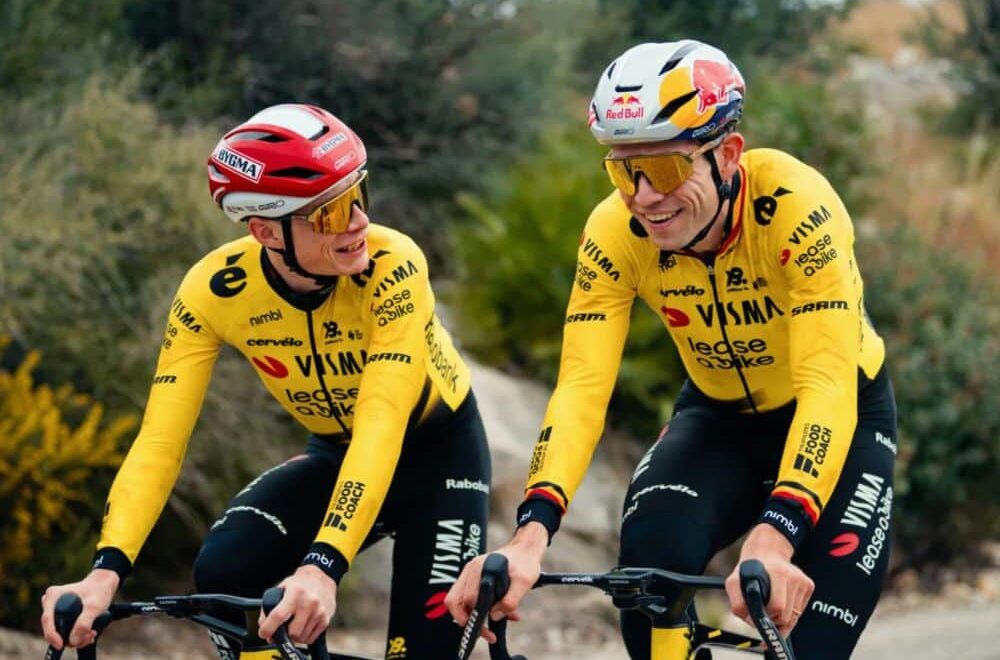
Pro cycling’s biggest official newsflash ahead of the Tour Down Under was Visma-Lease a Bike star GC rider Jonas Vingegaard’s announcement that he will be targeting both the Giro and the Tour this year. But rather than signaling a simple increase in ambition from Vingegaard, the decision more clearly reflects the current balance of power in men’s cycling. Visma-LAB and Vingegaard recognize that securing a grand tour victory prior to the Tour de France guarantees a narrative for season-long success as opposed to betting everything on the slim chance of defeating Tadej Pogačar in July. This approach may strike some as defeatist, but for those who have been paying any kind of attention, Vingegaard’s nemesis is as close to unbeatable as any rider has been in the history of the sport. Pogačar is a lock to win monuments, grand tours, and stage races with apparent ease, and the rational response from his competitors is not always to keep banging their heads against the same wall. But the future implications are significant: if Pogačar continues on this trajectory, more top-tier GC riders could split their objectives in response. Hence, rather than everyone heading to the Tour de France as the single, all-or-nothing proving ground, it could decrease the level of competition each July and increase the odds of Pogačar stacking up historic Tour stage tallies and GC wins, perhaps even challenging Lance Armstrong’s unofficial run of seven. On the other hand, at least for the short-term, it may dilute the Tour’s dominant focus at the center of cycling’s annual calendar – not necessarily a bad thing.

Will US Fans be Able To Watch the GIRO?
Regardless of whether Vingegaard succeeds at the Giro and becomes just the eighth rider of all time to win all three grand tours, there is a question as to whether U.S.-based fans will even be able to watch that history being made. No U.S. streaming service currently has any RCS-organized races, including the Giro d’Italia, listed on its 2026 schedule. In fact, HBO Max, the platform RCS has partnered with in the past, does not list any road or mountain bike events on its 2026 cycling calendar. According to reporting from Escape Collective, RCS has still not secured a buyer for its international television rights, despite the 2026 WorldTour season already getting underway. In an era when most major sports leagues are receiving once-unfathomable sums for their broadcast rights, cycling’s ongoing inability to effectively monetize its biggest events at all (outside of hosting fees) stands in stark contrast to the historic level of talent currently on display in the peloton – more on that below.

Who doesn’t love Stava? Here’s a ride PEZ did from the Oxygen Lifestyle Bike Hotel in Rimini.
Strava has apparently filed for an initial public offering of its stock, likely driven by its most recent private placement valued at more than $2 billion. Such a transaction would provide a potential liquidity event and exit for two of its long-time venture capital backers – Sequoia Capital and TCV Partners. According to various sources, the fitness platform is on a streak of strong performance at the moment, with subscriptions up, growing revenue and initially successful moves to diversify its business further. The firm has engaged the top-flight firm of Goldman Sachs to manage the process, with a listing expected as early as later this spring. Observers suggested that the incoming capital might be employed to make further additive and diversifying acquisitions within the broader, and rapidly growing “social fitness” space. The company was recently estimated to have some 150 million members globally – from more than 185 countries.

The most talked about topic in pro cycling over the last week not in the headlines has involved the rumored positive test from a top rider. There has been much speculation as to the gender, team, and even the name of the athlete across nearly every social media platform, but without proof, much of that is irrelevant and secondary to a topic which is far more important for the sport’s long-term future. That would be a strong athletes’ union that consecrates a collective bargaining agreement with the UCI – and more importantly, creates an internally-governed drug testing policy. While it may seem unfair, or a slap in the face of clean athletes to have such a model, a strict WADA model in professionally-regulated, CBA-governed pro leagues is a poor fit for the myriad legal challenges, social discourse of doping issues, and broader impacts on sports economics. Public accusation and humiliation of athletes in a system that treats them as guilty until proven innocent hasn’t worked in the broader landscape, and – based on recent CAS cases favoring the accused athletes – ends up wasting valuable resources without reversing the trends and pressures that influence doping behaviors.
Would a comprehensive CBA clean up pro cycling and prevent doping? Probably not. However, its ability to handle such crises without attacks on the sport’s image and integrity, and to prevent consequential losses in sponsorship and viewership, would be a positive development. One only needs to look at the influence of CBAs on other doping-impacted professional sports like the NFL, MLB, and NBA to understand that collective responsibility, consequences, and discretion play an impactful role in sporting economics. For example, MLB’s “Joint Drug Prevention and Treatment Program” defines testing windows, drug and treatment types, and strict confidentiality guidelines to which the league and the athletes mutually adhere; but unlike the WADA code, it is jointly negotiated, internally run, and followed without external adjudication interference.
The WADA code and NADO bodies, as well as the CAS, play a vital role in the integrity of elite and amateur Olympic sports, particularly for the health of the junior ranks as athletes track towards professional sports careers. Given the sponsorship dependency, fragile financial structure, and shaky public image of pro cycling, it is important to reflect on whether the now 26-year-old WADA model is fit for a professional sport that yearns to look and operate more like many leagues but is anachronistically anchored to antiquated governance policies. Whatever the perspective, the upcoming PED-focused “Enhanced Games” will rapidly skew the landscape, normalizing doping activities and forcing the issues for cycling’s athlete bodies and critical sponsor-funded team pipelines.

● The Exploding Cost of Watching Sports
The cost to be able to watch an entire sport’s season is continuing to skyrocket across many leagues, with collateral effects to pro cycling as we’ve noted regarding RCS’s content distribution conundrum. Mergers between key broadcasters and skyrocketing licensing rights costs may be poised to shrink the overall fan base, as content lands in more expensive subscription tiers, or becomes piecemeal to the point where it is simply not economical for fans to buy a season of racing from a variety of different platforms. New industry stressors indicate that it will get worse before it gets better. First, Regional Sports Networks (RSNs) are inching towards complete collapse after nine Major League Baseball clubs opted out from broadcasting over Main Street Sports Group’s FanDuel Sports Network, which as mentioned in many of our 2024 AIR postings, comprises the remaining viable assets of the post-bankruptcy Bally Sports holdings. Should multiple sales or merger deals not materialize, rights held by the RSNs would revert back to MLB (and other sports leagues, for NHL and NBA rights). However, the real potential damage is that it could further concentrate league media rights into just a very few mega-outlets, reducing consumer choice and further increasing subscription costs.
A material example of this higher-cost, restricted-access outcome was laid bare in the ongoing DISH networks lawsuit against Disney regarding consumer access to ESPN programming. DISH’s contention is that Disney is engaging in a monopoly that restricts platforms from offering economically-friendly “skinny bundles” to consumers who only want to subscribe to sports-focused content packages for a specific timeframe – a practice which pro cycling fans clamor for during the May through September grand tour season. Disney, on the other hand, is going the exact route we examined in our recent Warner Bros. Discovery sale analysis article – aggressively acquiring the content rights and creating exclusive consumer access channels but then pushing ever-higher tiered access pricing to monetize the massive investments in sports media licenses. A judge already essentially shot down Disney’s assertion that it could contractually control how providers like DISH offer such content to its satellite service customers, but a DISH win is not a sure bet.
From a consumer cost perspective, FOS Sports generated a simple yet damning graphic in its year-end news roundup that perfectly illustrates the impact: the NBA’s new $77+ billion-dollar media rights deal has drastically increased the consumer access costs, with a monthly bill of $126 and a season-long package across multiple rights outlets now at a staggering $1355. At a bare minimum, the middle-tier, no ad interruptions subscription matrix of HBO MAX, Peacock, and FloSports for a full season of cycling in the U.S. is now a little over $500. We’ve lamented that the current sports broadcasting situation of an increasingly narrow, almost monopolistic sports broadcasting market is making access to racing content more and more expensive, further pushing cycling’s content to the fringes and devaluing the licensing rights.
The intersection of sports and politics continues to blur as disruptive and financially powerful states like the United Arab Emirates attempt to reshuffle the order through military statecraft and sports sponsorships. We have covered the UAE’s geopolitical aspirations in prior AIRmail editions, including its vast material and advisory support for the RSF paramilitary rebellion in Sudan which committed a genocide in El Fasher last October, with revised death tolls now estimating up to 100,000 victims in the region. The January collapse of UAE’s other supported rebellion in Yemen, in which its forces had to turn tail and withdraw all military assets after a rapid routing by Saudi-backed militias has suddenly put the Emirates on a back foot internationally. According to political and military analysts, the UAE has been playing a dangerous hand by backing insurgencies across its proxy sphere of influence: these groups operate outside any nation’s constitution or international laws and have committed war crimes and destabilized resources in ecologically and economically fragile regions. As a result, and at the very least, UAE’s role in the El Fasher atrocities and its support of the RSF will be played out unfavorably in the arena of public opinion in 2026 – a prolonged process of a thousand cuts which could affect its sponsorship of sports league stadiums, the NBA’s in-season tournament, and potentially its currently-dominant pro cycling team. More to the point, the UCI, which has cozied to UAE investment and influence including awarding its 2027 road world championships to host city Abu Dhabi, may not escape the impending political and public crossfire. Sports and politics may be our least favorite aspect of the global scene to analyze, but the outcomes are all too important to pro cycling’s future to ignore.
Written and Edited by Steve Maxwell / Joe Harris / Spencer Martin
THE OUTER LINE
www.theouterline.com
@theouterline
Visit our website for our latest articles and commentary. And check out our extensive Article Library for hundreds of in-depth articles about the economics, governance, structure and competition of pro cycling, organized by subject. (Advisory Group: Peter Abraham, Luke Beatty, Brian Cookson OBE, Nicola Cranmer, Prof. Roger Pielke, Jr., Dr. Bill Apollo and Prof. Daam Van Reeth.)
The post OUTER Line: Vinge’s Giro-Tour Double | No GIRO TV? | Strava IPO | Shady Sponsorship & More appeared first on PezCycling News.